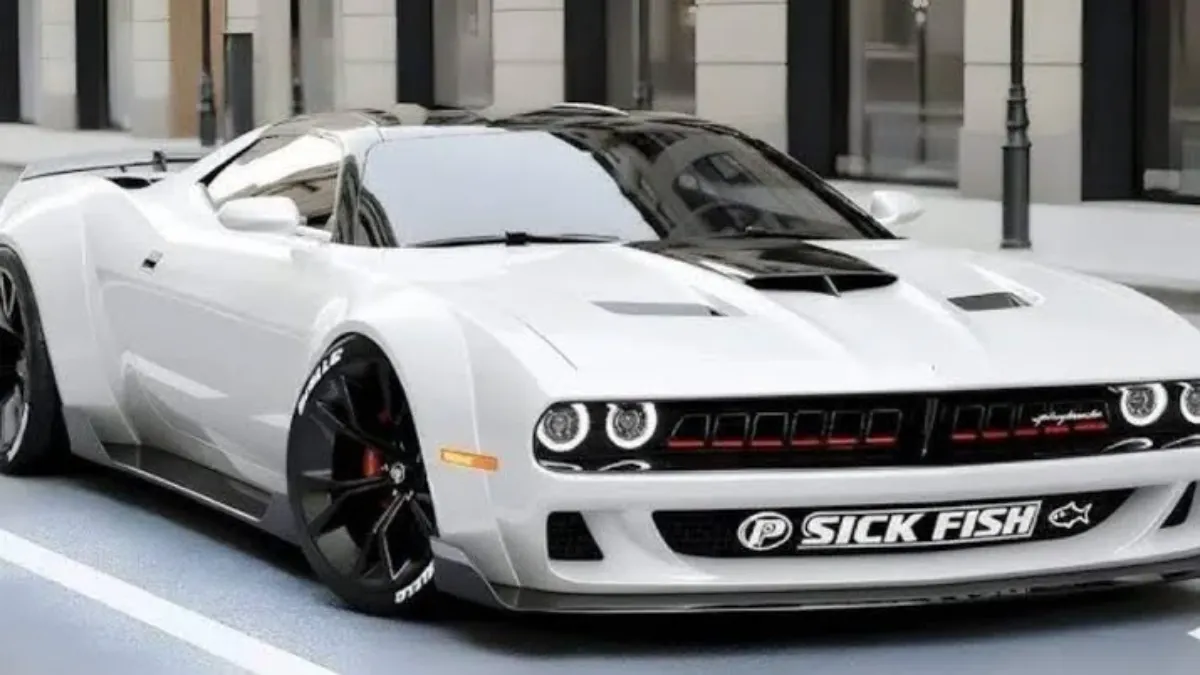
The Plymouth Cuda has always been one of the most recognizable names in American muscle-car history. Its low stance, aggressive shape, and powerful personality made it a dream car for generations of enthusiasts.
Now, the name 2026 Plymouth Sick Fish Cuda is appearing across the internet, creating plenty of curiosity among classic-car and muscle-car fans. But there is an important point to clear up before getting into the design, engine, price, or features.
There is no officially announced production 2026 Plymouth Sick Fish Cuda.
The “Sick Fish” name actually comes from a highly customized 1970 Plymouth Cuda, rather than a new factory-built Plymouth model. Over the years, this famous Cuda has been transformed into a modern restomod, combining classic styling with modern performance engineering.
So, when people talk about a “2026 Sick Fish Cuda,” they are generally referring to the idea of what a modern Cuda inspired by the famous Sick Fish could look like.
What Is the Plymouth Sick Fish Cuda?
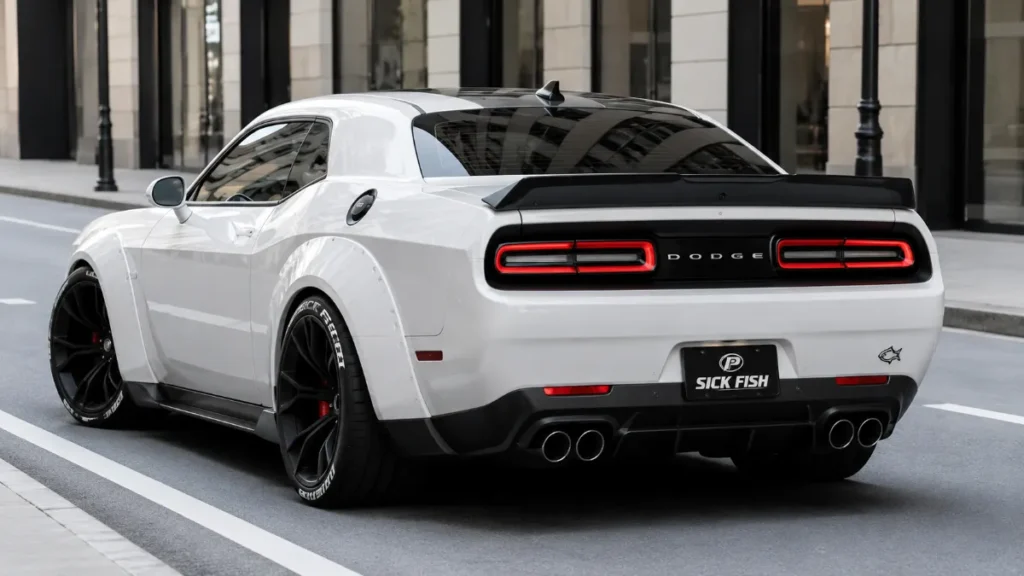
The story behind Sick Fish is almost as interesting as the car itself.
The famous custom 1970 Plymouth Cuda became associated with designer Chip Foose and builder Troy Trepanier of Rad Rides by Troy. Instead of simply restoring the classic muscle car to its original condition, the project took a much more ambitious approach.
The classic Cuda body was combined with major upgrades to the chassis, suspension, interior, and mechanical components.
That created something that looked unmistakably like a classic Cuda but could offer a much more modern driving experience.
The car later became part of Joe Rogan’s collection, and in 2023 it received another significant mechanical and chassis update from Roadster Shop.
This history is important because many online references to a “2026 Plymouth Sick Fish Cuda” are actually based on this famous restomod and the idea of giving its philosophy a modern interpretation.
A Classic Cuda Design With a Modern Twist
If a new Sick Fish-inspired Cuda were ever built, its exterior would probably be its biggest selling point.
The original Cuda had a wide, low-slung profile that immediately gave it a muscular appearance. A modern interpretation could preserve those proportions while introducing cleaner bodywork and contemporary technology.
Possible design elements could include:
- A low and wide muscle-car stance
- Sculpted body panels inspired by the classic Cuda
- Modern LED headlights and taillights
- Large performance wheels
- Wider performance tires
- Aggressive front-end styling
- Modern aerodynamic details
- A more refined body surface
The goal would not necessarily be to copy the 1970 Cuda line for line. Instead, a modern design could capture the character of the original while making the car look appropriate for today’s roads.

Of course, these are concept possibilities, not confirmed factory specifications.
Interior: Classic Character Meets Modern Technology
The original Cuda was built during an era when muscle cars were much simpler than today’s performance vehicles.
A modern Sick Fish-inspired car would need to offer a very different cabin experience.
A contemporary interior could feature a driver-focused dashboard, digital instrumentation, premium materials, modern climate controls, and performance-oriented seats.
The trick would be getting the balance right.
Too much modern technology could make the cabin feel disconnected from the classic Cuda identity. A well-designed restomod should make the technology feel like it belongs in the car rather than simply being added on top.
The existing Sick Fish build follows a similar philosophy, featuring Recaro seats, digital instrumentation, and carbon-fiber details while maintaining the character of the classic car.
Performance Would Be the Heart of the Sick Fish
The Sick Fish is not just about looking good.
Its mechanical setup is a major part of what makes the car special.
During its later rebuild, the car received a modernized chassis and a naturally aspirated 7.0-liter Mercury Marine SB4 V8 producing approximately 750 horsepower.
That is serious power, but the philosophy behind the rebuild goes beyond simply chasing a bigger horsepower number.
Modern chassis engineering was used to improve the way the car handles, brakes, and drives.
That distinction matters.
A classic muscle car can be incredibly exciting in a straight line, but modern performance engineering can make a vehicle much more confident when it comes to cornering, braking, and everyday drivability.

Restomod vs. Traditional Restoration
The Sick Fish is a great example of the difference between a traditional restoration and a restomod.
A traditional restoration generally focuses on returning an old vehicle to its original condition and specification.
A restomod, on the other hand, keeps the personality and appearance of the classic vehicle while replacing or upgrading selected mechanical and technological components.
That is exactly what makes Sick Fish interesting.
It does not try to turn the Cuda into something completely different. Instead, it asks a simple question:
What if a classic Cuda could deliver a more modern driving experience without losing its original character?
The Sick Fish project is essentially an answer to that question.
Modern Chassis and Suspension Technology
One of the biggest limitations of many classic muscle cars is that their suspension, steering, brakes, and chassis were designed decades ago.
The Sick Fish rebuild addressed these areas with modern engineering.
The Roadster Shop work included major chassis changes along with modern suspension and braking technology.
The result is intended to make the car more capable on today’s roads.
That means the focus is not only on acceleration. A properly engineered restomod should also provide better control when turning, stopping, and driving at higher speeds.
This is one of the main reasons serious restomods can feel dramatically different from their original counterparts.
What Could a Modern Sick Fish Cuda Look Like?
Since there is no confirmed 2026 production model, it would be misleading to present exact specifications as official.

However, if a manufacturer or custom builder created a modern Cuda based on the Sick Fish philosophy, the package could potentially look something like this:
| Feature | Possible Modern Sick Fish Concept |
|---|---|
| Design | Cuda-inspired modern muscle-car styling |
| Body Style | Two-door performance coupe |
| Engine | High-performance V8 |
| Drivetrain | Rear-wheel drive |
| Interior | Driver-focused modern cabin |
| Instrumentation | Digital display technology |
| Seats | Performance sport seats |
| Suspension | Modern performance setup |
| Brakes | High-performance braking system |
| Wheels | Large performance wheels |
| Overall Theme | Classic design with modern engineering |
| Status | Unofficial concept/restomod |
Again, this table describes a possible modern interpretation, not an official 2026 Plymouth specification sheet.
Why the Plymouth Cuda Still Has So Much Appeal
The Cuda name continues to attract attention because of its place in American automotive history.
The 1970–1974 Cuda and Barracuda models have become highly collectible, particularly rare and high-performance versions.
Their dramatic proportions and powerful engine options helped establish the Cuda as one of the standout muscle cars of its era.
The Sick Fish takes that heritage in a different direction.
Instead of keeping the car completely original, it demonstrates how classic styling can be combined with modern engineering without completely removing the vehicle’s personality.
For enthusiasts who love both classic cars and modern performance, that combination is extremely appealing.
Is the 2026 Plymouth Sick Fish Cuda a Real Production Car?
This is probably the most important question.
At this point, the answer is no—not as an officially announced factory production model.
There is a major difference between a custom restomod, a digital rendering, a concept design, and a production vehicle.
A genuine production car would normally have confirmed specifications, an official manufacturer announcement, pricing, production information, safety certification, and a sales or dealership network.
There is currently no official evidence establishing a new 2026 Plymouth Sick Fish Cuda as a production vehicle.
Because of that, online claims about an exact MSRP, confirmed launch date, official booking amount, dealership availability, or factory warranty should be treated carefully unless they come from an authoritative source.

Could the Cuda Return in the Future?
The idea of bringing back the Cuda is certainly attractive to muscle-car enthusiasts.
However, creating a modern production performance car is much more complicated than building a one-off restomod.
Today’s vehicles have to meet modern safety, emissions, efficiency, and technology requirements. A new Cuda would also need to fit into the wider performance-car strategy of its manufacturer.
That makes a modern production Cuda a very different project from rebuilding an existing classic.
For now, the Sick Fish remains a fascinating example of what can happen when classic American muscle-car design meets modern engineering.
What About the Price?
Because there is no confirmed 2026 Plymouth Sick Fish Cuda production model, there is no official MSRP to report.
Any exact “2026 Sick Fish Cuda price” published online should therefore be treated as speculation unless it is supported by an official announcement.
The cost of a real custom Cuda restomod can vary enormously depending on the condition of the original car, engine, chassis, suspension, brakes, interior, wheels, and level of customization.
A professionally built restomod can be a completely different financial proposition from a normal production car.
Final Verdict
The 2026 Plymouth Sick Fish Cuda is best understood as a modern interpretation of a legendary classic rather than a confirmed new Plymouth production model.
The real Sick Fish is a heavily modified 1970 Plymouth Cuda, associated with Chip Foose, Troy Trepanier, and later Joe Rogan’s collection. Its subsequent rebuild introduced modern chassis engineering and a roughly 750-horsepower 7.0-liter V8 while preserving the distinctive character of the classic Cuda.
That combination is what makes the Sick Fish so interesting.
It shows that classic American muscle does not necessarily have to remain trapped in the past. With the right engineering, a legendary design can retain its visual identity while gaining modern performance, handling, braking, and interior technology.
If a true modern Cuda ever returns, the Sick Fish would be a fascinating blueprint to look back at: classic muscle-car attitude on the outside, modern engineering underneath, and a driving experience designed for a new generation.