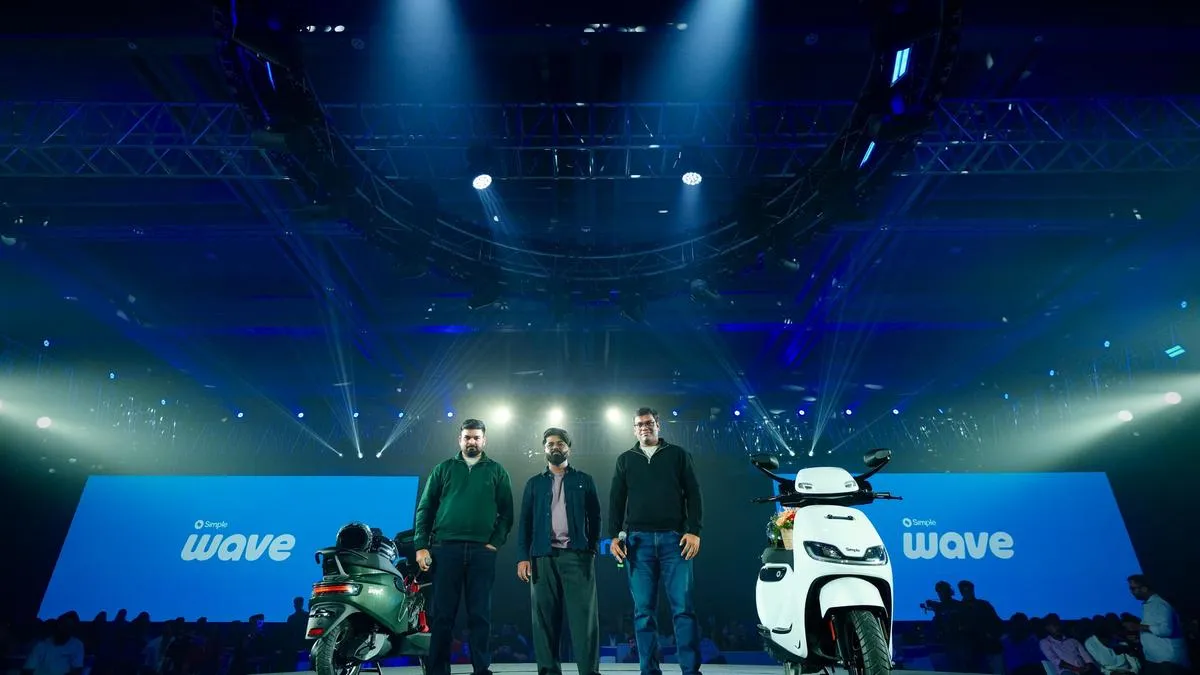
Simple Energy has officially entered the family electric scooter market with the new Simple Wave. Unlike the company’s more performance-focused Simple One, the Wave has been developed around everyday practicality, comfort and storage. It starts at an introductory ₹1,09,999 ex-showroom and offers battery options ranging from 2.2kWh to 5kWh, with the top version claiming up to 243km of IDC range. Deliveries are scheduled to begin on 25 September 2026.
The biggest attraction here is not just the range figure. Simple Energy has also focused heavily on things that matter to regular Indian scooter buyers: a long seat, flat floorboard, generous storage, connected technology and different battery configurations.
Here is everything you need to know about the Simple Wave Electric Scooter 2026, including its price, battery, range, performance, features, storage, variants, colours and expected real-world practicality.
Simple Wave 2026: Quick Highlights
| Feature | Simple Wave 2026 |
|---|---|
| Starting Price | ₹1,09,999 ex-showroom |
| Vehicle Type | Family Electric Scooter |
| Battery Options | 2.2kWh, 2.7kWh, 3.7kWh, 5kWh |
| Maximum Claimed IDC Range | Up to 243km |
| Top Speed | Up to 90km/h |
| Motor | PMSM electric motor |
| Maximum Motor Power | Up to 6.4kW |
| Storage | Up to 70 litres combined |
| Seat Length | 920mm |
| Wheels | 12-inch alloy |
| Front Brake | Disc |
| Rear Brake | Drum |
| Display | TFT, configuration dependent |
| Deliveries | From 25 September 2026 |
| Colours | Pearl White, Coral Red, Twilight Black, Polar Blue, Dolphin Grey, Forest Green |
The specifications and configurations vary across the Wave S, Wave and Wave+ versions.
Simple Wave Electric Scooter Price in India
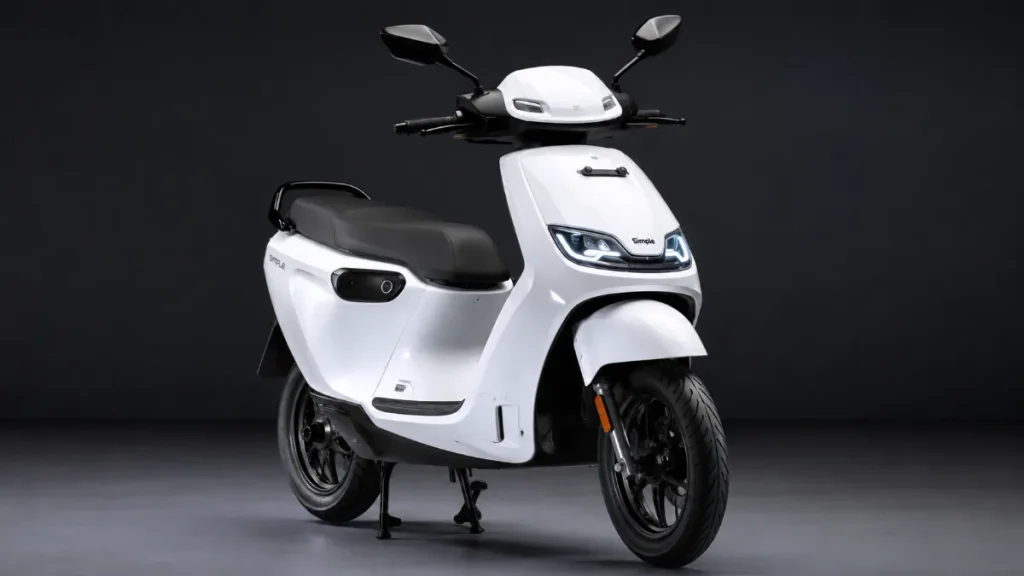
The Simple Wave price starts at ₹1,09,999 ex-showroom, making the scooter considerably more accessible than Simple Energy’s earlier performance-oriented positioning might suggest. The launch price is introductory, so buyers should check the latest official price before booking.
At present, the company has announced the starting price, while pricing for higher battery configurations has not been fully published across all sources. This means it would be better not to assume a fixed price for the 2.7kWh, 3.7kWh or 5kWh versions until Simple Energy confirms those figures.
For reference, the base Wave S EBN 2.2kWh is listed at ₹1,09,999 ex-showroom, while on-road pricing varies depending on insurance and location.
Simple Wave expected price structure
- Wave S 2.2kWh: ₹1,09,999 ex-showroom
- Wave S 2.7kWh: Price to be announced
- Wave 3.7kWh: Price to be announced
- Wave+ 5kWh: Price to be announced
There are different equipment/instrument-cluster configurations within the lineup, which is why some reports describe the scooter as four variants while others group them into three main models.
Simple Wave 2026 Range: Up to 243km
Range is clearly one of the biggest selling points of the new scooter.
The official Simple Energy product page claims:
Wave+ – up to 243km IDC range
Wave – up to 171km IDC range
Wave S – up to 132km IDC range
The smaller 2.2kWh Wave S is rated at about 110km IDC range, while the 2.7kWh configuration is listed at about 132km.
That gives customers something useful: instead of forcing every buyer to pay for a very large battery, Simple Energy is offering different battery capacities for different daily-use requirements.
Battery and claimed range
| Version | Battery | Claimed IDC Range |
|---|---|---|
| Wave S EBN | 2.2kWh | 110km |
| Wave S | 2.7kWh | 132km |
| Wave | 3.7kWh | 171km |
| Wave+ | 5kWh | 243km |
These are claimed/IDC figures. Actual riding range can be lower depending on rider weight, traffic, speed, road conditions, riding mode, tyre pressure, temperature and use of other electrical systems.
Simple Wave Motor and Performance
The Simple Wave uses an electric motor with output of up to 6.4kW, according to current published specifications. The highest versions can reach 90km/h, while the Wave S is rated for 75km/h.
The official figures also quote a 0–40km/h time of around 3.3 seconds for the Wave and Wave+, while the Wave S takes around 4 seconds.
That should make the scooter suitable for normal city traffic and daily commuting rather than just low-speed neighbourhood use.
For family buyers, the more important point is how easily it can handle stop-and-go traffic, flyovers and a pillion rider. Features such as hill-hold assistance and traction control are intended to make everyday riding easier on higher configurations.
70-Litre Storage Is One of Its Biggest Advantages
This is where the Simple Wave becomes particularly interesting.
Simple Energy has designed the Wave around practicality and claims 70 litres of combined storage. The scooter gets a large under-seat storage area along with additional storage compartments on the body panels.
For an Indian family scooter, this is genuinely useful.
It can help with carrying:
- Helmets and small riding gear
- Grocery bags
- Daily-use belongings
- Rain equipment
- Small office bags
- Chargers and accessories
Storage is often something buyers only think about after purchasing a scooter. Simple Energy appears to have made it a major part of the Wave’s design from the beginning.
Family-Focused Design Instead of a Sporty Look
The Simple Wave looks very different from the company’s Simple One.
Instead of a sharp, sporty silhouette, the Wave adopts a boxier and more family-oriented design. It gets a large seat, spacious floorboard and a more upright everyday-scooter appearance.
The seat measures around 920mm in length, according to launch reports. This should be useful for riders who regularly carry a pillion or simply prefer a more relaxed seating arrangement.
The overall design seems to follow a simple philosophy: make the scooter easy to live with every day.
Simple Wave Features
The Wave is not positioned as a basic electric scooter. Simple Energy has added a decent amount of technology, particularly on the better-equipped versions.
Key features include:
TFT Instrument Display
The scooter is available with a TFT instrument setup on selected configurations. The display is designed to provide information such as riding data and vehicle status while giving the Wave a more modern feel.
Smartphone Connectivity
Higher-spec versions include smartphone connectivity, allowing riders to access connected functions through the scooter’s technology ecosystem.
Hill Hold Assist
Hill-hold assistance can be helpful when starting on an incline, especially in traffic situations.
Traction Control
Traction control is available on higher trims/configurations, giving the Wave an additional electronic safety feature.
Disc Front Brake and Rear Drum
The scooter uses a front disc and rear drum braking setup. This is a familiar arrangement in the Indian scooter market and is complemented by CBS on the relevant configurations.
Simple Wave Suspension and Ride Comfort
The Wave uses twin rear shock absorbers, rather than the monoshock layout used on the Simple One range.
That change fits the Wave’s family-oriented character.
Indian city roads can be unpredictable, with speed breakers, potholes and uneven patches appearing almost everywhere. A scooter intended for family use therefore needs suspension tuned more toward comfort than aggressive handling.
The long seat and flat floorboard should also make the riding position more accommodating for daily users.
Simple Wave Wheels and Brakes
The Simple Wave rides on 12-inch alloy wheels and uses tubeless tyres. The braking setup includes a front disc brake and rear drum brake.
This combination is fairly practical for city commuting, while the relatively compact wheel size should help keep the scooter easy to manoeuvre in traffic.
The scooter also offers CBS as standard according to current published specifications, while traction control is reserved for higher trims.
Simple Wave Colours
The new electric scooter is offered in several colours designed to appeal to a broad family audience.
The official Simple Energy website currently lists:
- Pearl White
- Coral Red
- Twilight Black
- Polar Blue
- Dolphin Grey
- Forest Green
Availability can vary by variant.
Simple Wave Variants Explained
The Simple Wave family is easier to understand when the battery sizes are considered.

1. Simple Wave S
The Wave S is the entry-level version and is focused on urban commuting.
It is available with smaller battery configurations, including the 2.2kWh battery with around 110km claimed range and a 2.7kWh setup offering around 132km. The top speed of the Wave S is around 75km/h.
This version makes the most sense for riders who primarily travel within the city.
2. Simple Wave
The standard Wave gets a 3.7kWh battery and a claimed IDC range of around 171km.
Its top speed rises to 90km/h, making it more suitable for riders who regularly travel longer distances or use larger city roads.
3. Simple Wave+
The Wave+ is the range-focused flagship.
It gets a 5kWh battery and claims up to 243km IDC range, along with a 90km/h top speed.
For people with longer daily commutes, this is likely to be the most interesting version.
Is the 243km Range Real?
This is an important question.
The 243km figure is an IDC claimed range, not a promise that every rider will travel 243km in normal traffic.
Real-world range depends on several factors, including:
Speed: Higher speeds consume more energy.
Traffic: Frequent acceleration and braking can reduce efficiency.
Rider and pillion weight: More load requires more energy.
Road conditions: Hills and rough roads affect consumption.
Riding mode: Performance-oriented riding generally uses more energy.
So, a buyer should consider the claimed 243km figure as a benchmark rather than a guaranteed everyday number.
Simple Wave Charging
Charging information can vary between battery configurations, and buyers should check the exact charging specification for the version they are booking.
Current listings indicate charging capability that can make the scooter practical for regular overnight or scheduled charging. One current listing quotes a 0–80% charging time of around 2 hours 15 minutes for the base configuration, although charging time can differ by variant and charger.
For most city users, home charging overnight remains the simplest ownership routine.
Simple Wave vs Simple One
The two scooters are designed for different buyers.
| Area | Simple Wave | Simple One |
|---|---|---|
| Main Focus | Family use | Performance |
| Design | Practical/family | Sportier |
| Seating | Long, family-oriented | Performance-oriented |
| Storage | Large | More performance-focused layout |
| Target User | Daily commuter/family | Enthusiast/tech-focused rider |
| Range | Up to 243km claimed | Different depending on model |
| Character | Comfortable and practical | Faster, sportier |
Simple Energy’s decision to introduce the Wave is significant because it gives the company a product aimed at the much larger family-scooter segment rather than relying only on performance-focused buyers.
Simple Wave Rivals in India
The Wave enters a competitive family electric scooter market.
Potential alternatives include:
- Ather Rizta
- TVS iQube
- Bajaj Chetak
- TVS Orbiter
- Vida VX2
Autocar India has also identified scooters such as the Ather Rizta, TVS iQube and Bajaj Chetak as relevant rivals.
The Simple Wave’s strongest talking points against these products are its large claimed range, multiple battery choices and generous storage.
What Makes the Simple Wave Different?
The most interesting part of the Simple Wave is the balance between range and practicality.
Many electric scooters focus heavily on either performance, styling or price. Simple Energy is trying something slightly different here.
The Wave combines:
Up to 243km claimed range
70-litre combined storage
920mm-long seat
Multiple battery options
Up to 90km/h top speed
Connected technology
Family-focused ergonomics
Those features make it much more than a smaller version of the Simple One.
Who Should Consider the Simple Wave?
The scooter should be particularly interesting for someone who wants an electric scooter for regular city use but does not want to compromise too much on practicality.
Good choice for:
Daily office commuters: The different battery sizes allow buyers to choose according to their travel distance.
Families: The long seat, flat floorboard and large storage area are useful for everyday family use.
Long-distance city commuters: The bigger battery versions provide substantially more claimed range.
EV buyers who want technology: TFT displays, connectivity and electronic rider aids make the higher versions more appealing.
Who May Not Need the Wave+?
The 5kWh Wave+ and its 243km claimed range sound impressive, but not every buyer needs such a large battery.
For someone travelling 20–30km every day, the smaller Wave S may make more sense.
A larger battery can bring a higher purchase price and adds weight. Buyers should choose based on actual daily use rather than simply choosing the version with the biggest range number.
Simple Wave Pros and Cons
Pros
Long claimed range: Up to 243km IDC is the headline figure.
Huge storage: 70 litres of combined storage is a major practical advantage.
Family-friendly design: Long seat and spacious floorboard suit everyday use.
Multiple battery choices: Customers get more flexibility.
Useful technology: TFT, connectivity, hill hold and traction control on higher versions.

Cons
Higher variant prices need clarity: Complete pricing across the range needs to be checked before booking.
IDC range is not real-world range: Actual distance will depend heavily on riding conditions.
Charging infrastructure still matters: Home charging is important for hassle-free EV ownership.
Brand network: Simple Energy’s dealership/service reach remains an important factor for buyers outside major cities.
Simple Wave Delivery Date
Simple Energy has confirmed that deliveries of the Wave are scheduled to begin from 25 September 2026.
Initial availability and delivery timelines can differ between cities, variants and booking periods, so buyers should confirm the local schedule with Simple Energy.
Simple Wave 2026: Our Verdict
The Simple Wave Electric Scooter 2026 feels like a major step for Simple Energy.
The company is moving away from an image built mainly around performance electric scooters and entering the much bigger family-scooter space. The Wave’s design is deliberately practical, and features such as the long seat, flat floorboard and 70-litre storage show that Simple Energy understands what everyday Indian scooter buyers actually need.
The biggest headline remains the 243km claimed IDC range of the Wave+, but the more interesting story is the availability of multiple battery configurations. A commuter travelling short distances does not necessarily need a 5kWh battery, while someone with a long daily commute can choose the bigger pack.
At an introductory starting price of ₹1,09,999, the Simple Wave has certainly entered the market with an attention-grabbing price.
The real test, however, will come after deliveries begin: real-world range, charging experience, service support and long-term reliability will ultimately decide how successful the Wave becomes.
For now, the Simple Wave looks like a serious new family EV option for Indian buyers who want practicality without giving up modern electric-scooter technology.
Simple Wave 2026 FAQ
What is the price of the Simple Wave?
The Simple Wave starts at ₹1,09,999 ex-showroom at launch.
What is the maximum range of Simple Wave?
The top Wave+ version claims up to 243km IDC range.
What is the battery capacity of Simple Wave?
Battery capacities range from 2.2kWh to 5kWh, depending on the configuration.
What is the top speed of Simple Wave?
The Wave and Wave+ can reach 90km/h, while the Wave S is rated at 75km/h.
How much storage does the Simple Wave have?
Simple Energy claims 70 litres of combined storage.
When will Simple Wave deliveries start?
Deliveries are scheduled to start from 25 September 2026.
Is Simple Wave suitable for family use?
Yes. The scooter has been specifically designed as a family-oriented electric scooter, with a long seat, spacious floorboard and large storage area.
How many colours are available?
Simple Energy currently lists six colours: Pearl White, Coral Red, Twilight Black, Polar Blue, Dolphin Grey and Forest Green.