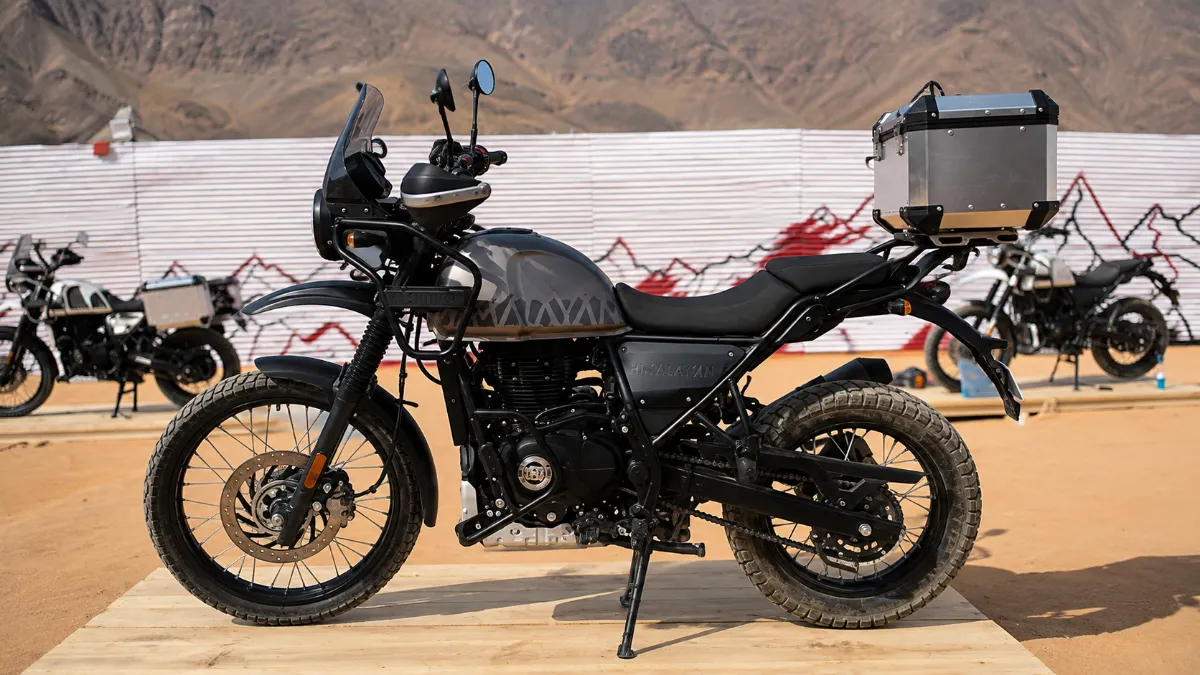
Royal Enfield has officially launched the new Himalayan 440 in India at ₹2.29 lakh (ex-showroom, Chennai). The motorcycle made its debut at the company’s Himalayan Basecamp event in Ladakh on September 4, 2026, bringing back the simple, rugged character associated with the original Himalayan 411 while adding the newer 443cc LS440 engine borrowed from the Scram 440.
At first glance, the Himalayan 440 may look like a straightforward addition to Royal Enfield’s adventure-bike line-up. But there is a bigger story behind it. The company is clearly targeting riders who liked the original Himalayan 411 but don’t necessarily want the larger, more expensive and more technology-heavy Himalayan 450.
Instead, the new bike focuses on the things that made the 411 popular in the first place: simple mechanicals, a relaxed engine, proper off-road hardware and an uncomplicated riding experience.
The result is a motorcycle that sits in an interesting position between the Scram 440 and Himalayan 450, while keeping the Himalayan name and adventure-focused design.
Himalayan 440: Quick Highlights
| Feature | Royal Enfield Himalayan 440 |
|---|---|
| Price | ₹2.29 lakh |
| Engine | 443cc single-cylinder |
| Engine Family | LS440 |
| Maximum Power | 25.4hp |
| Maximum Torque | 34Nm |
| Gearbox | 6-speed |
| Fuel Tank | 15 litres |
| Front Wheel | 21-inch |
| Rear Wheel | 17-inch |
| Front Suspension Travel | 200mm |
| Rear Suspension Travel | 180mm |
| Front Brake | 300mm disc |
| Rear Brake | 240mm disc |
| ABS | Dual-channel, switchable rear |
| Kerb Weight | 199kg |
| Variants | Single |
| Colours | Mustang Brown, Nela White, Sela Black |
| Booking | Open from September 4, 2026 |
The motorcycle’s specifications are based on the launch information currently available.
Royal Enfield Himalayan 440 Price in India
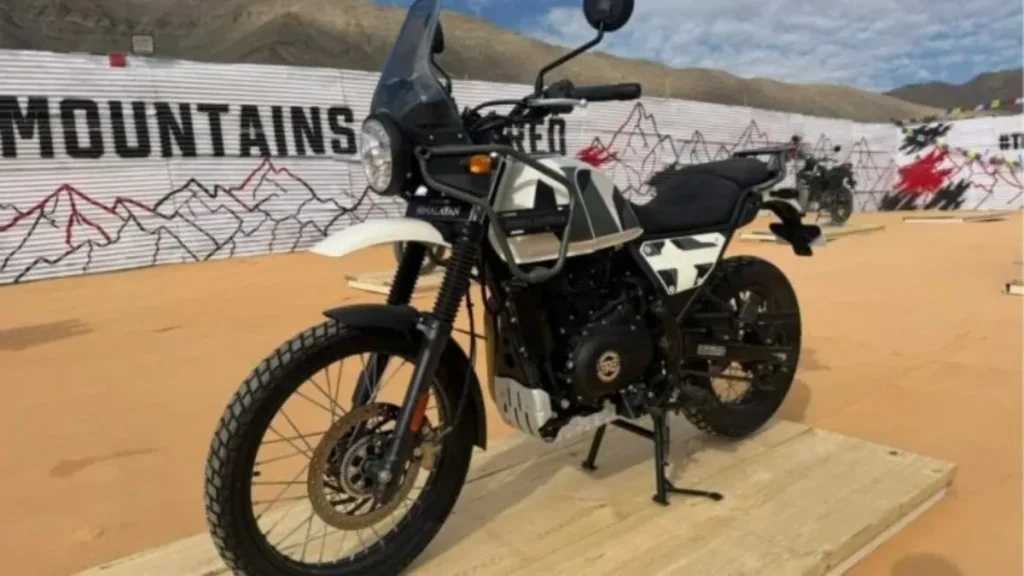
The Himalayan 440 price is ₹2.29 lakh ex-showroom, with Royal Enfield offering the motorcycle in a single variant. All three colour choices carry the same price.
This is an important part of Royal Enfield’s strategy.
The Himalayan 450 is positioned as the more advanced and powerful motorcycle, while the Himalayan 440 gives buyers a simpler alternative without moving too far away from the Himalayan experience.
For riders who don’t need a premium TFT screen, liquid cooling or the latest electronic package, the Himalayan 440 could be a more attractive entry point.
Himalayan 440 Price
Himalayan 440 – ₹2.29 lakh ex-showroomOn-road pricing will naturally be higher and will vary by state, insurance, registration and other charges.
Himalayan 440 Launch Date
Royal Enfield launched the Himalayan 440 in India on September 4, 2026, at its Himalayan Basecamp event in Ladakh. The launch location itself is fitting because the Himalayan name has always been closely associated with long-distance adventure riding and Himalayan touring.
Bookings have opened through Royal Enfield dealerships and its website, while dealership units have already started reaching outlets.
Himalayan 440 Engine: Same Family as Scram 440
The most familiar part of the Himalayan 440 is its engine.
Royal Enfield has used the 443cc LS440 single-cylinder engine that also powers the Scram 440. It produces 25.4hp and 34Nm.
On paper, those figures may not look dramatically different from the old Himalayan 411, but the newer motor offers a little more performance.
The Himalayan 411 produced 24.5hp and 32Nm, meaning the Himalayan 440 gains around 1.4hp and 2Nm.
More importantly, Royal Enfield says around 90 percent of the engine’s torque is available from 2,800rpm, which should make the bike feel useful at relatively low engine speeds.
That suits an adventure motorcycle particularly well.
Instead of constantly needing to rev the engine, the rider gets a healthy amount of torque in the lower and middle portions of the rev range.
Six-Speed Gearbox
The LS440 engine is paired with a six-speed transmission, carried over from the Scram 440.
For touring riders, the additional gear should make highway riding more comfortable compared with a shorter five-speed arrangement.
At the same time, the transmission gives the rider enough flexibility when moving from smooth highways to slower trails.
One thing worth mentioning is that the Himalayan 440 does not get a slipper clutch.
That’s one of the areas where Royal Enfield has kept the motorcycle relatively simple.
21-Inch Front Wheel Is the Big Difference
The biggest mechanical difference between the Himalayan 440 and Scram 440 is the wheel setup.
The Himalayan 440 gets a 21-inch front wheel and 17-inch rear wheel, compared with the Scram 440’s more road-oriented 19/17-inch arrangement.
Why does that matter?
A larger front wheel generally helps an adventure motorcycle deal with obstacles such as rocks, broken surfaces, ruts and loose terrain more confidently.
It also reinforces the Himalayan 440’s off-road identity.
The motorcycle uses spoked wheels rather than alloy wheels, which is another indication that Royal Enfield has prioritised adventure riding over purely urban use.
Himalayan 440 Suspension
Royal Enfield has also changed the suspension setup compared with the Scram 440.
At the front, the Himalayan 440 gets 200mm of wheel travel, which is 10mm more than the Scram 440. At the rear, suspension travel stands at 180mm.
The rear uses a linkage-mounted monoshock.
The longer front travel should give the bike more ability to absorb rough terrain and larger obstacles.

For somebody who plans to ride beyond smooth city roads, this could be one of the most important differences between the Himalayan 440 and Scram 440.
Himalayan 440 Ground Clearance and Off-Road Character
Royal Enfield has kept the Himalayan 440 focused on adventure riding rather than turning it into another road-biased scrambler.
The 21-inch front wheel, spoked rims and 200mm front suspension travel all point in the same direction.
The motorcycle is intended to feel comfortable when the road disappears.
That does not mean it is an extreme enduro motorcycle. Instead, its strength should be long-distance adventure touring where riders encounter a mixture of highways, broken roads, gravel tracks and moderate off-road sections.
Himalayan 440 Brakes and ABS
The motorcycle uses a 300mm front disc with a two-piston floating caliper and a 240mm rear disc with a single-piston floating caliper.
Dual-channel ABS is standard.
More importantly for off-road riders, the rear ABS can be switched off.
This is a small but useful feature because some experienced riders prefer to have more freedom to control the rear wheel on loose surfaces.
For everyday road riding, however, keeping ABS active provides an additional safety layer.
Himalayan 440 Gets a Simpler Instrument Cluster
Another area where Royal Enfield has deliberately avoided going too high-tech is the instrument cluster.
The Himalayan 440 gets a twin-pod arrangement.
The left pod houses the speedometer, while the right side features Royal Enfield’s familiar Tripper navigation pod with Google Maps-powered navigation.
This is significantly simpler than the large TFT dashboard of the Himalayan 450.
For some riders, that will be an advantage rather than a disadvantage.
The Himalayan 440 is clearly designed around the idea that a motorcycle doesn’t need a huge screen to be useful.
USB Type-C Charging
There is, however, a modern touch.
The Himalayan 440 gets a USB Type-C charging port, replacing the USB Type-A setup found on the Scram 440.
For touring riders using phones for navigation, charging compatibility is becoming increasingly important.
It is a small feature, but one that makes sense on a motorcycle intended for long journeys.
Himalayan 440 Design: 411 Spirit Returns
One of the most interesting things about the Himalayan 440 is its design.
Royal Enfield has not simply copied the Scram 440 and changed the front wheel.
The bike carries a more traditional Himalayan silhouette, which gives it a clear visual connection to the older Himalayan 411.
This is exactly what many existing Himalayan fans were hoping for.
The Himalayan 450 brought a major shift in design and technology, but the 440 takes a more familiar route.
That makes the Himalayan 440 feel less like a completely new adventure motorcycle and more like an evolution of the original idea.
Himalayan 440 Seat and Ergonomics
The Himalayan 440 has been designed to remain approachable for adventure touring.
Its riding position is upright, with a wide handlebar and an ergonomically natural stance.
Compared with a dedicated street motorcycle, this riding position should be more comfortable for long hours in the saddle.
The relatively simple cockpit also makes the bike feel less intimidating to riders who prefer a traditional adventure motorcycle.
15-Litre Fuel Tank
The Himalayan 440 shares the 15-litre fuel tank with the Scram 440.
For an adventure motorcycle, a reasonable fuel-tank capacity is important because touring routes do not always have fuel stations every few kilometres.
The actual range will depend on riding conditions and fuel economy, so owners should not calculate touring range simply from the tank capacity.

Still, 15 litres gives the bike useful fuel capacity for everyday riding and longer journeys.
Himalayan 440 Weight
The new motorcycle weighs 199kg kerb, making it around 12kg heavier than the Scram 440.
That weight increase comes alongside the larger front wheel, different suspension setup and adventure-focused equipment.
On paved roads, the extra weight may not be particularly noticeable once the motorcycle is moving.
On technical off-road sections, however, 199kg is still a considerable amount of motorcycle to manage.
This is something prospective buyers should consider carefully.
The Himalayan 440 is built for adventure touring, not for being thrown around like a lightweight enduro.
Himalayan 440 Colours
Royal Enfield is offering the Himalayan 440 in three colours:
Mustang Brown
Nela White
Sela Black
All three colours are available at the same ₹2.29 lakh ex-showroom price.
The colour choices also suit the Himalayan’s rugged character, with the darker options giving the bike a particularly traditional adventure-bike appearance.
Himalayan 440 Warranty
Royal Enfield is also offering an extended warranty package with the launch of the Himalayan 440.
The standard warranty is 3 years/30,000km, while Royal Enfield says its extended warranty programme can take coverage up to 7 years across its line-up.
For buyers planning to keep the motorcycle for several years, this could provide additional peace of mind.
Warranty terms and conditions should be checked with an authorised Royal Enfield dealer before purchase.
Himalayan 440 vs Himalayan 450
This is probably the biggest question potential buyers will ask.
| Feature | Himalayan 440 | Himalayan 450 |
|---|---|---|
| Positioning | Simpler ADV | Premium modern ADV |
| Engine | 443cc | 452cc |
| Character | Simple and rugged | More powerful and advanced |
| Instrument | Twin-pod + Tripper | TFT |
| Front Wheel | 21-inch | 21-inch |
| Front Suspension | 200mm | More advanced setup |
| Technology | Simpler | More extensive |
| Target Rider | Traditional ADV fan | Modern ADV buyer |
The Himalayan 440 is not intended to completely replace the Himalayan 450.
Instead, it gives Royal Enfield another option.
A rider who wants a modern TFT display, liquid-cooled engine and more sophisticated package may prefer the 450.
Someone who wants a straightforward machine closer in spirit to the original Himalayan may find the 440 more appealing.
Himalayan 440 vs Scram 440
The Himalayan 440 and Scram 440 share plenty of hardware, but their personalities are different.
The Scram is more road-oriented.
The Himalayan 440 is built around adventure riding.
The key differences include:
21-inch front wheel on Himalayan 440 vs 19-inch on Scram 440
200mm front suspension travel vs 190mm
Adventure-focused bodywork
Spoked wheel setup
Higher off-road orientation
So, even though both motorcycles use the same LS440 engine, they are aimed at different riders.
Who Should Buy the Himalayan 440?
The new bike makes the most sense for riders who want a traditional adventure motorcycle without stepping into the Himalayan 450’s more premium territory.
It could be a good fit for:
Long-distance Touring
The six-speed gearbox, 15-litre fuel tank and upright ergonomics make it suitable for highway touring.

Weekend Adventure Riding
The 21-inch front wheel and long-travel suspension are better suited to broken roads and trails than a conventional road motorcycle.
Himalayan 411 Fans
This could be the most important group.
The Himalayan 440 preserves much of the simplicity and visual character that attracted riders to the original Himalayan.
First-Time ADV Buyers
Its relatively uncomplicated mechanical package could also make it easier to understand for somebody entering the adventure-bike segment.
Who Should Think Twice?
There are also buyers for whom the Himalayan 440 may not be the ideal choice.
Someone who mainly rides inside a city may find a lighter road-oriented motorcycle easier to manage.
Likewise, riders who want maximum performance, modern electronics and premium suspension technology may be better served by the Himalayan 450.
The 440 is not trying to be everything.
Its appeal comes from doing a smaller number of things well.
Himalayan 440: Pros and Cons
Pros
₹2.29 lakh price gives it an interesting position in Royal Enfield’s range.
443cc engine produces useful 34Nm torque.
21-inch front wheel improves its off-road orientation.
200mm front suspension travel is useful on rough terrain.
Rear ABS can be switched off for off-road riding.
Simple instrument setup will appeal to traditionalists.
15-litre fuel tank is useful for touring.
Three-year standard warranty, with extended coverage available up to seven years.
Cons
199kg kerb weight is considerable for technical trails.
No slipper clutch may disappoint some buyers.
Twin-pod cluster is functional but less premium than the Himalayan 450’s TFT.
25.4hp is adequate rather than outright powerful.
Spoked wheels aren’t tubeless, which may matter to long-distance touring riders.
Is Himalayan 440 Better Than Himalayan 411?
For riders who loved the original Himalayan 411, the answer is likely yes in several important areas.
The 440 gets a slightly more powerful engine, six-speed gearbox, updated instrumentation, USB-C charging, more modern hardware and fresh styling details while retaining the basic Himalayan philosophy.
The difference is not revolutionary.
And that may actually be the point.
Royal Enfield has created a motorcycle that feels like a natural next step rather than completely changing the formula.
Is Himalayan 440 Better Than Himalayan 450?
That depends entirely on the rider.
The Himalayan 450 remains the more sophisticated motorcycle.
But the Himalayan 440 is not supposed to beat it on every specification.
Instead, it offers something different: simplicity.
For riders who want fewer electronic layers and a more traditional adventure-bike experience, the 440 could actually be the more appealing motorcycle.
That gives Royal Enfield a useful two-bike approach in the Himalayan family.

Himalayan 440 Rivals
The motorcycle enters an increasingly competitive adventure-bike market.
Depending on budget and riding requirements, buyers may also consider:
- KTM 390 Adventure
- Yezdi Adventure
- Hero Xpulse range
- Royal Enfield Himalayan 450
- Scram 440
The Himalayan 440’s biggest advantage may be its combination of brand familiarity, traditional design and reasonable price.
Himalayan 440: What Makes It Special?
The most important part of the Himalayan 440 isn’t actually the 443cc engine.
It is the philosophy behind the motorcycle.
Royal Enfield has recognised that not every rider wants a highly complicated motorcycle.
Some riders want to travel.
Some want to explore dirt roads.
Some want a motorcycle that they can understand mechanically.
And some simply miss the feeling of the original Himalayan.
The Himalayan 440 is designed for those people.
Himalayan 440 Final Verdict
The Royal Enfield Himalayan 440 is an interesting motorcycle because it doesn’t try to win a specification war.
Instead, it goes back to basics.
At ₹2.29 lakh, buyers get a 443cc single-cylinder engine producing 25.4hp and 34Nm, a six-speed gearbox, a 21-inch front wheel, 200mm front suspension travel and proper adventure-bike hardware.
It is also considerably simpler than the Himalayan 450.
That simplicity could be its biggest strength.
The new Himalayan 440 feels like Royal Enfield has listened to the riders who enjoyed the Himalayan 411 but didn’t necessarily want the more sophisticated direction taken by the Himalayan 450.
It isn’t the fastest adventure bike.
It isn’t the lightest.
It doesn’t have the biggest screen or the most electronic features.
But that isn’t really the point.
The Himalayan 440 is about getting out and riding.
For weekend explorers, long-distance tourers and riders who prefer straightforward motorcycles, that could be exactly what makes this new Royal Enfield so appealing.
The real test will now come from owners taking it onto Indian highways, mountain roads and trails. But on paper, the Himalayan 440 looks like a convincing return to the original Himalayan formula—with just enough modernisation to make it relevant in 2026.
Himalayan 440 FAQs
What is the price of Himalayan 440 in India?
The Royal Enfield Himalayan 440 is priced at ₹2.29 lakh ex-showroom.
When was the Himalayan 440 launched?
Royal Enfield launched the Himalayan 440 in India on September 4, 2026.
What engine does the Himalayan 440 use?
It uses a 443cc single-cylinder LS440 engine producing 25.4hp and 34Nm.
Does Himalayan 440 have a 21-inch front wheel?
Yes. It gets a 21-inch front wheel and 17-inch rear wheel.
What is the Himalayan 440 fuel tank capacity?
The motorcycle gets a 15-litre fuel tank.
Does Himalayan 440 have ABS?
Yes. Dual-channel ABS is standard, and the rear ABS can be switched off.
How much does the Himalayan 440 weigh?
The Himalayan 440 has a 199kg kerb weight.
How many variants does Himalayan 440 have?
Royal Enfield has launched it in a single variant with three colour choices.
What are the Himalayan 440 colours?
The available colours are Mustang Brown, Nela White and Sela Black.
Does Himalayan 440 have tubeless tyres?
The launch version uses spoked wheels and does not get tubeless tyres.
Is Himalayan 440 cheaper than Himalayan 450?
Yes. The Himalayan 440 is positioned as a more accessible and simpler alternative to the Himalayan 450, although exact comparative pricing depends on the current Himalayan 450 variant.