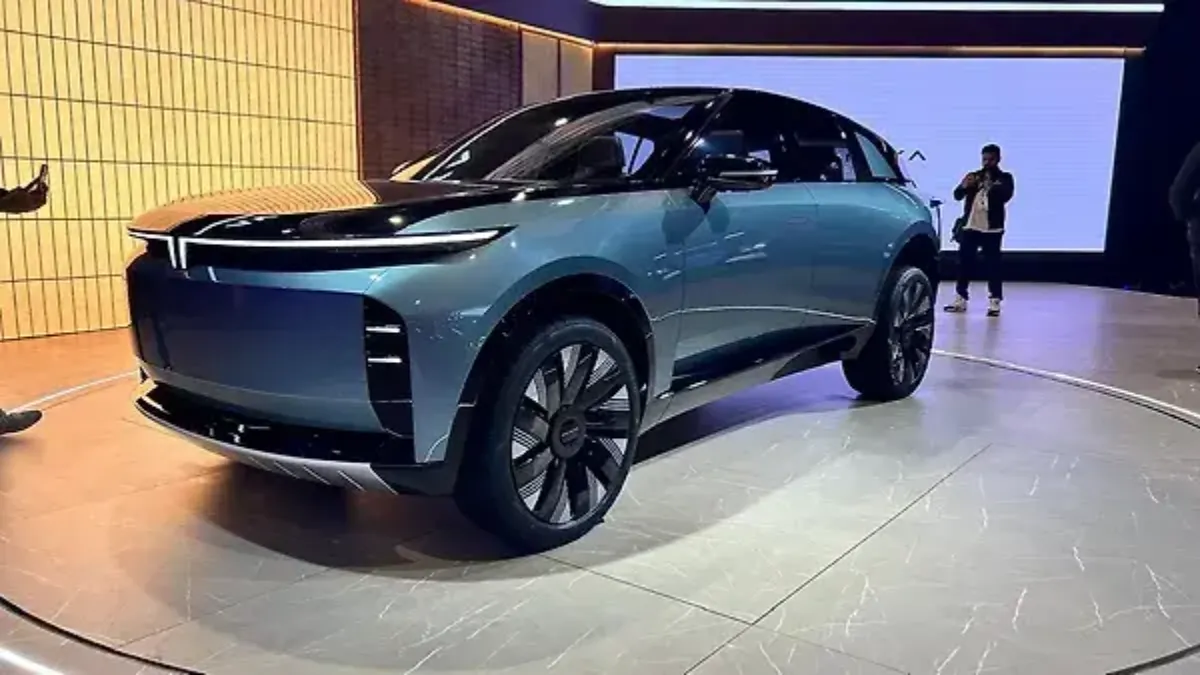
Tata Motors has already played a major role in bringing electric cars into the mainstream Indian market. Models such as the Nexon EV, Punch EV, Curvv EV and Harrier EV have helped make electric mobility more accessible. But the company’s next big challenge is not simply selling another EV
It is about moving upmarket.
That is where the Tata Avinya comes in.
Originally showcased as a futuristic electric concept in 2022, Avinya was designed from the beginning around the idea of premium electric mobility. Tata’s own concept description focused on spaciousness, technology, comfort and a calm, minimalist experience rather than simply chasing performance figures.
The production programme has taken longer than originally expected, but the project is now moving closer to reality. The first production model, expected to be called the Avinya X, is targeted for an Indian launch in 2027. Tata has also changed the platform strategy, making the upcoming model even more interesting.
Tata Avinya Is Taking a Different Route to Production
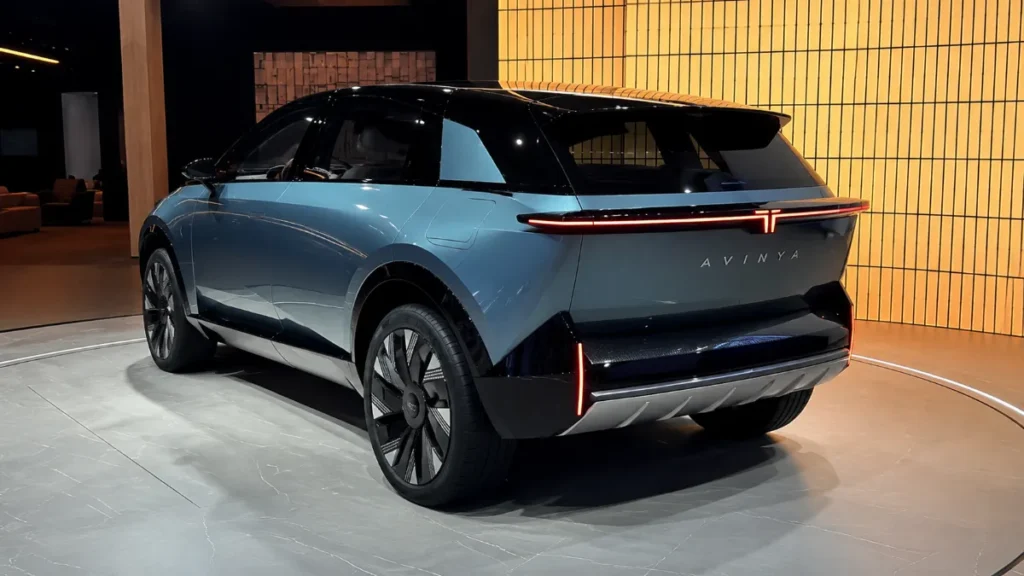
The original Avinya programme was expected to use Jaguar Land Rover’s Electrified Modular Architecture (EMA).
That plan has now changed.
Tata has confirmed that the first Avinya vehicle launching in India in 2027 will use the Freelander platform produced by the Chery-JLR joint venture (CJLR). The vehicle is expected to be manufactured at the new TMPV-JLR facility in Panapakkam, Tamil Nadu.
This is a major change, but it does not necessarily mean a downgrade.
In fact, the new approach could help Tata bring Avinya to market faster while keeping development costs under control.
Why Did Tata Change the Platform?
Developing a completely dedicated premium EV architecture for relatively limited volumes can be an expensive proposition.
By using an existing architecture from the Chery-JLR ecosystem, Tata can concentrate more resources on the areas customers will actually experience:
- Exterior design
- Interior quality
- Software
- Electronics
- Connectivity
- Ride comfort
- Localisation
- Customer experience
Reports indicate that Tata will adapt the platform’s electronics, software and vehicle systems for Indian requirements rather than simply taking the architecture unchanged.
That could be one of the most important parts of the Avinya strategy.
Avinya X Will Be the First Production Model
The Avinya X is expected to lead the production family.
Internally associated with the P2 programme, the model has moved ahead of the earlier P1 project in Tata’s revised roadmap. Engineering prototypes were expected to begin testing during 2026, with the market launch planned for 2027.
More recently, camouflaged test vehicles believed to be related to the production Avinya have been spotted on Indian roads, suggesting development is progressing toward the launch phase.
This makes the Avinya project much more tangible than it was when the original concept was first shown.
The Real Mission: Make Tata Feel Premium
This is where Avinya becomes particularly important.
Tata already sells EVs across several price points. But the company has historically been perceived primarily as a mainstream Indian car manufacturer.
The Avinya brand needs to change that perception.
A premium vehicle cannot simply be a larger Tata with more equipment.
Customers paying significantly more will expect:
- Higher-quality materials
- Better seat comfort
- Superior cabin insulation
- More polished software
- Stronger technology integration
- Refined ride and handling
- Premium customer service
- A more exclusive buying experience
In other words, Tata has to sell an experience, not just an electric powertrain.
Mahindra Has Already Raised Expectations
Tata will not enter this space without competition.
Mahindra’s recent electric vehicles have demonstrated that an Indian manufacturer can create a premium-feeling EV without using an established luxury badge.
The XEV 9e and other newer Mahindra EVs have helped change expectations around what an Indian electric vehicle can look and feel like.
That creates a difficult benchmark for Avinya.
Tata cannot afford to arrive in 2027 with a product that simply feels like a more expensive version of its existing lineup.
Avinya Needs Its Own Identity
The biggest opportunity for Tata is to make Avinya feel like a separate premium proposition.
The company has already described Avinya as a global premium EV brand and said the range will be built around scalable platforms and architectures while retaining Tata Motors’ design, engineering and integration capabilities.
That distinction is important.
The customer should be able to walk into an Avinya showroom and immediately understand that this is different from buying a Nexon EV or Harrier EV.
The Original Avinya Concept Had a Clear Vision
The original 2022 concept was not designed like a conventional SUV.
Tata imagined Avinya as a new type of electric vehicle combining elements of a premium hatchback, SUV and MPV.
The concept focused heavily on:
- Space
- Minimalism
- Wellness
- Technology
- Sustainable materials
- Connectivity
- Comfort
Tata also highlighted its Gen 3 EV architecture, advanced connectivity and driver-assistance technology as part of the original vision.
The production car will inevitably be more practical than the concept, but retaining that philosophy could help Avinya stand apart.
Premium Interior Could Be Avinya’s Biggest Advantage
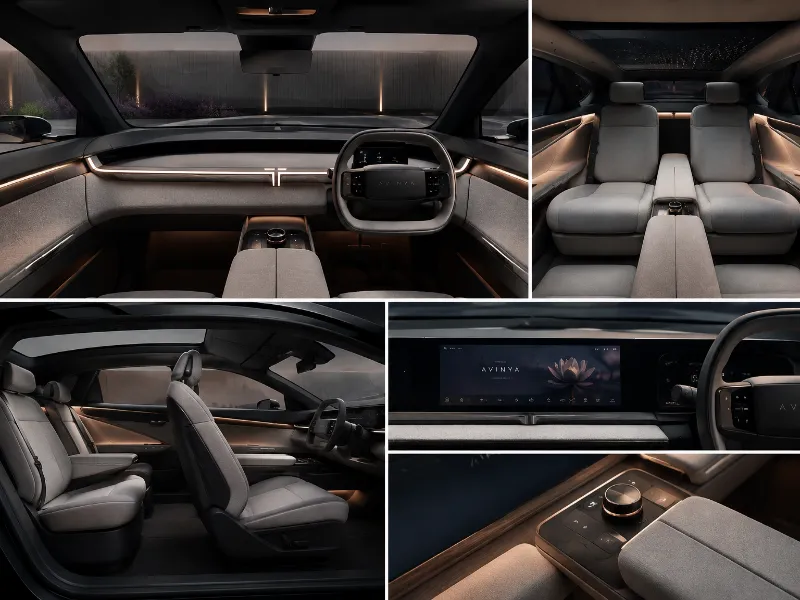
If Tata wants Avinya to compete in the premium EV space, the interior will be extremely important.
The Avinya X concept presented a lounge-inspired cabin with a minimalist dashboard, sustainable materials and a strong focus on passenger comfort.
Tata’s concept also featured unusual details such as fabric-wrapped soundbars, hidden ventilation elements, aroma-related features and lounge-style rear seating.
Whether all of these elements reach production remains to be seen.
But the basic idea is strong: make the cabin feel like a premium space rather than simply a place filled with screens.
Technology Will Be Just as Important as Design
Modern premium EV buyers increasingly expect their vehicles to behave more like connected devices.
For Avinya, Tata will need to deliver software that feels polished from the first interaction.
Potential areas of importance include:
- Connected-car functions
- Over-the-air updates
- Advanced infotainment
- Smartphone integration
- Intelligent voice controls
- Driver-assistance technology
- Personalised vehicle settings
- Digital charging information
The platform change gives Tata an opportunity to develop these systems specifically around the Indian market.
What About Battery and Range?
This is one area where Tata has not yet revealed the complete production specification.
There have been reports suggesting different battery capacities for the upcoming model, but official battery, range, charging and performance figures should not be treated as confirmed until Tata announces them.

That is particularly important because Avinya will compete in a premium segment where customers will expect strong highway range and fast charging.
The original Avinya concept talked about ultra-fast charging and a target of adding at least 500km of range in under 30 minutes, but those were concept-era targets rather than confirmed production specifications.
So, the final production numbers will be worth watching closely.
Avinya Could Become More Than One Car
Another important part of the strategy is that Tata does not appear to view Avinya as a single-product project.
The company is developing Avinya as a premium EV family, with additional models being considered after the first vehicle. Reports have also indicated the possibility of a larger three-row premium electric SUV in the future.
That would make the first Avinya extremely important.
If the Avinya X succeeds, Tata could use it as the foundation for an entire premium electric portfolio.
Separate Premium Experience Could Be Key
A premium product needs a premium ownership experience as well.
Tata’s existing dealership network is designed to serve a broad customer base. Avinya may require a different approach, particularly if Tata wants to compete with premium brands.
A more exclusive retail environment could include:
- Dedicated Avinya touchpoints
- Personalised buying assistance
- Premium delivery experience
- Special service support
- Digital-first ownership
- Faster customer response
- More personalised after-sales care
The product may be the reason someone buys an Avinya, but the ownership experience will influence whether they consider the brand genuinely premium.
Manufacturing in India Is Another Advantage
The first Avinya is planned to be manufactured at Tata’s new facility in Panapakkam, Tamil Nadu, using the CJLR Freelander platform.
Local production could eventually help Tata increase localisation and control costs.
That could become particularly important if Tata wants Avinya to offer premium technology without pushing its price too far beyond the reach of Indian buyers.
The balance will be difficult: the car needs to feel expensive without becoming unnecessarily expensive.
Tata Avinya 2027: What We Know So Far
| Details | Tata Avinya |
|---|---|
| Brand | Avinya by Tata Motors |
| First production model | Avinya X |
| Expected launch | 2027 |
| Powertrain | Fully electric |
| Original platform plan | JLR EMA |
| Revised platform | Chery-JLR Freelander platform |
| Production location | Panapakkam, Tamil Nadu |
| Positioning | Premium/luxury EV |
| Future models | More Avinya EVs expected |
| Official battery details | Yet to be confirmed |
| Official range | Yet to be confirmed |
| Official price | Yet to be announced |
What Could Make Avinya Successful?
The formula is actually quite straightforward.

Tata does not need to beat every competitor on horsepower or screen size.
It needs to create a vehicle that feels complete.
That means excellent design on the outside, a genuinely premium cabin, smooth software, impressive charging capability, a quiet ride and a strong ownership experience.
Most importantly, the Avinya needs to feel special every time the owner gets inside.
What Could Go Wrong?
The biggest risk is positioning.
If Avinya is priced significantly higher than Tata’s existing EVs but does not provide a proportional improvement in quality, customers may simply choose a well-equipped mainstream EV or move to an established premium brand.
Another challenge will be timing.
The first concept appeared in 2022, while the production launch is now expected in 2027. By then, India’s EV market will be far more competitive than it was when Avinya was first revealed.
Technology, charging infrastructure, software expectations and consumer preferences will all have moved forward.
So Tata cannot launch Avinya based only on what looked futuristic in 2022.
It needs to feel future-ready in 2027.
Final Verdict
The Tata Avinya could be one of the most important cars in Tata Motors’ modern history.
It is not simply another electric SUV. It represents Tata’s attempt to move beyond its traditional mainstream positioning and establish a premium EV identity.
The decision to use the Chery-JLR Freelander platform instead of the originally planned JLR EMA architecture may sound like a major change, but it could actually help Tata bring the product to market faster and create a more viable business case. Tata says the first Avinya vehicle will use the CJLR platform and be built in India for its 2027 launch.
The real test, however, will not be the platform.
It will be the finished car.
If Tata can combine distinctive design, a genuinely luxurious interior, sophisticated software, strong EV performance and a premium ownership experience, Avinya could finally give the company a credible place in India’s premium electric-car market.
And that is why the 2027 Tata Avinya X is worth watching closely. It could be the car that determines whether Tata remains one of India’s leading mainstream EV makers—or successfully takes its next step into the premium world.