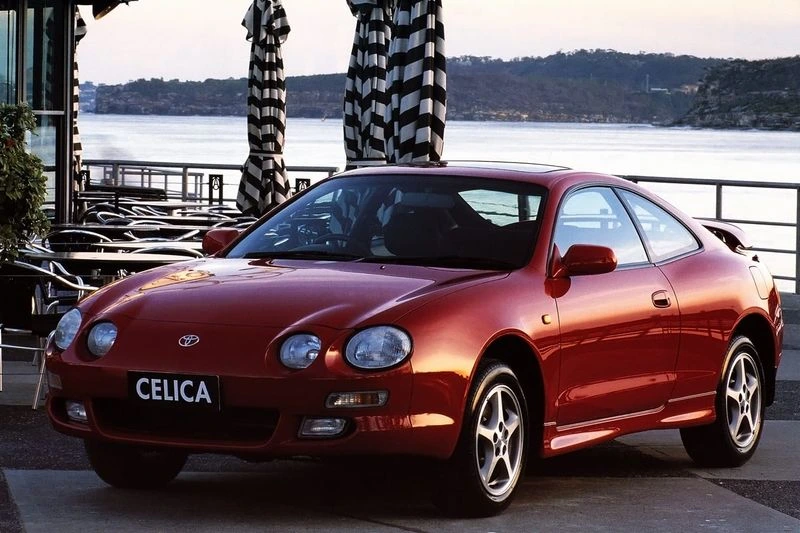
The Toyota Celica is coming back, and the latest reports suggest Toyota is taking a very different approach from many modern sports cars. Instead of developing an expensive, completely standalone platform, the new Celica is expected to use Corolla-related underpinnings, while adding a much more exciting hybrid powertrain and all-wheel drive.
That combination could make the next-generation Celica one of Toyota’s most interesting performance cars in years.
The revived model is reportedly being referred to internally as the Celica Sport and is expected to sit toward the entry point of Toyota’s growing Gazoo Racing performance family. The new coupe is also expected to challenge cars such as the Honda Prelude.
Important: Toyota has confirmed the Celica’s return, but several details about the production car—including final engine specifications, exact hybrid configuration, pricing and launch timing—have not yet been officially announced.
New Toyota Celica: Quick Highlights
| Expected Detail | New Toyota Celica |
|---|---|
| Model | Toyota Celica Sport |
| Generation | Eighth-generation Celica |
| Platform | Expected next-generation Corolla-related architecture |
| Body Style | 2-door sports coupe |
| Engine | Expected 2.0-litre turbo petrol |
| Hybrid | Expected |
| Drive | Expected AWD |
| Engine Code | G20E |
| Positioning | Entry-level Toyota/GR sports car |
| Main Rival | Honda Prelude |
| Launch | Timing not officially confirmed |
| Expected Character | Lightweight, sporty and performance-focused |
The platform and powertrain details are based on current reports rather than a final Toyota production specification.
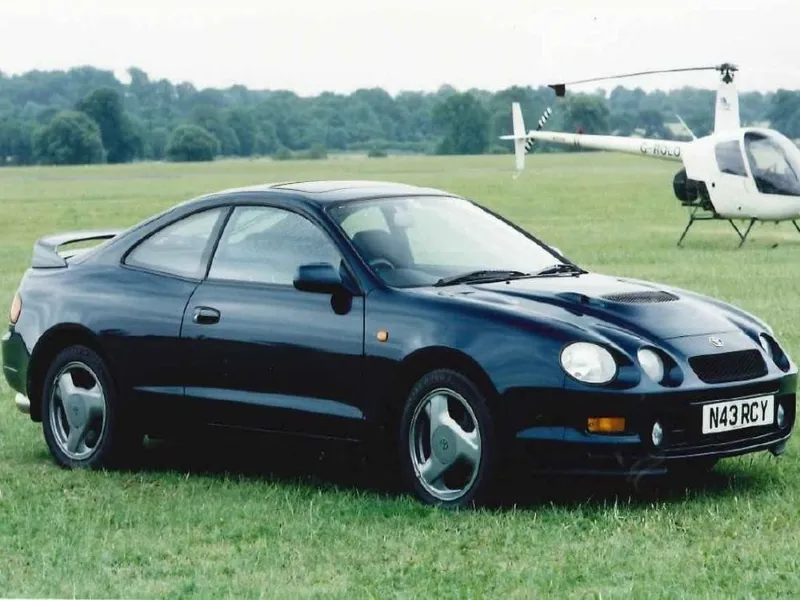
Why Is the New Toyota Celica Using Corolla Underpinnings?
At first, using a Corolla-based architecture might sound less exciting for a sports car.
But historically, Toyota has used mainstream components and platforms for several generations of the Celica. The latest reports suggest the company is continuing that philosophy with the new car.
There is a practical reason for doing this.
Developing a completely unique sports-car platform can be extremely expensive. By sharing architecture with a high-volume model such as the Corolla, Toyota can potentially reduce development and manufacturing costs while still giving the Celica its own body, suspension tuning and performance hardware.
This is similar to the strategy used by Honda with the new Prelude, which is closely related to the Civic underneath.
For buyers, that could ultimately mean a more affordable sports coupe.
The Corolla Connection Could Be More Important Than It Looks
The next-generation Corolla is expected to use Toyota’s updated multi-energy architecture, designed to accommodate different powertrain technologies.
That flexibility could give Toyota the foundation it needs to build a sporty coupe without creating an entirely new platform from scratch. Current reports point toward the Celica sharing significant architecture with the upcoming Corolla while receiving its own performance-focused tuning.
The goal appears to be simple:
Use Corolla technology underneath, but make the Celica feel like a completely different car from behind the wheel.
New Toyota Celica Hybrid Powertrain
The most surprising part of the Celica story is the reported hybrid powertrain.
The new coupe is expected to use Toyota’s developing 2.0-litre turbocharged four-cylinder engine, known as the G20E.
Toyota is developing this engine as a new-generation performance unit, and reports suggest it could eventually replace the current 1.6-litre three-cylinder engine used in products such as the GR Yaris and GR Corolla.
However, the exact Celica specification remains unconfirmed.
Toyota has not yet publicly locked down whether the production Celica will use a conventional hybrid system or a plug-in hybrid system.
That uncertainty is important because the final choice could have a major impact on the car’s weight, performance and efficiency.
Could the Toyota Celica Make Around 400 HP?
This is one of the most exciting rumours surrounding the new car.
Reports about Toyota’s new 2.0-litre turbo engine suggest that it has the potential to produce around 400 horsepower in certain road-going applications.
But buyers should not assume that the production Celica will definitely have 400 hp.
The final output will depend on:
- Hybrid system configuration
- Turbocharger setup
- Emissions requirements
- Cooling
- Transmission
- Vehicle weight
- Toyota’s positioning of the Celica within the GR range
So, for now, 400 hp should be treated as an expectation or reported possibility—not an official Celica specification.
All-Wheel Drive Could Bring Back the GT-Four Spirit
The new Toyota Celica is also expected to feature all-wheel drive.
This is particularly interesting because the Celica name has a strong connection with Toyota’s rally history.
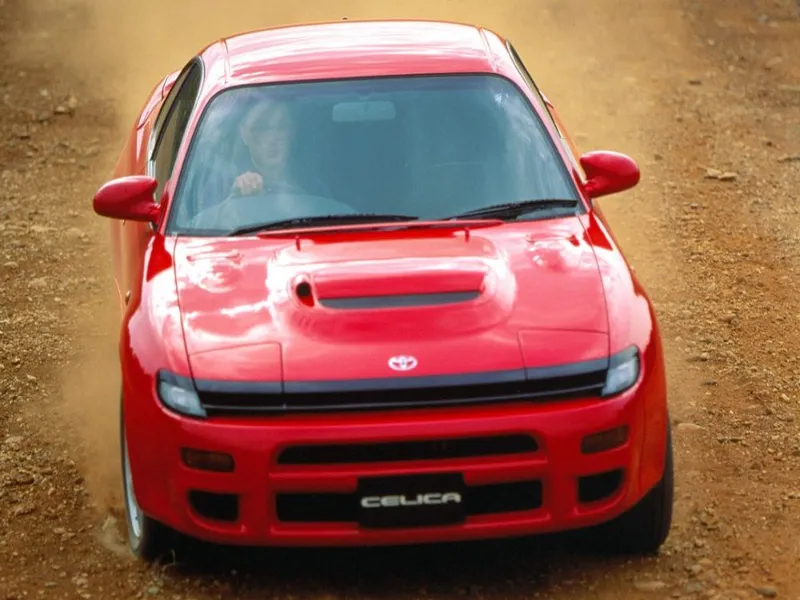
The famous Celica GT-Four became one of the defining performance versions of the nameplate, competing successfully in the World Rally Championship during the 1990s.
The new car could therefore use modern hybrid and AWD technology to reconnect with that performance heritage without simply copying the old GT-Four formula.
Toyota has confirmed to Autocar that the upcoming Celica is expected to have AWD, according to current reporting.
A Modern Celica Could Be More Than Just a Nostalgia Project
Toyota has been rebuilding its performance image over the past few years.
The GR Yaris and GR Corolla brought serious performance to relatively compact cars, while the GR86 and GR Supra continued Toyota’s sports-car lineup.
The returning Celica could become another important piece of that strategy.
Instead of being a retro-style coupe designed mainly around nostalgia, the new Celica is expected to combine:
- Hybrid technology
- Turbocharged performance
- AWD
- Modern electronics
- Lightweight engineering
- A compact two-door body
That could give Toyota a much broader performance lineup.
Toyota Celica Design: What Can We Expect?
Toyota has not yet revealed the final production design.
However, the company has shown performance concepts that give enthusiasts some clues about the direction of its future sports cars.
The upcoming Celica is expected to have a low-slung coupe profile, short overhangs and a wide stance.
The design will likely be significantly more aggressive than a regular Corolla while retaining enough practicality to make the car suitable for everyday use.
Expect features such as:
- Low roofline
- Wide rear haunches
- Sharp LED lighting
- Large air intakes
- Sculpted side panels
- Sporty alloy wheels
- Aggressive rear diffuser
- Dual or performance-focused exhaust treatment
These are expectations rather than confirmed production specifications.
Will the New Celica Be a GR Model?
This is another interesting question.
Current reports suggest the Celica Sport could become an entry point for Toyota’s performance-focused GR lineup.
Toyota has also trademarked the GR Celica name, adding further fuel to speculation around the model’s final branding.
If Toyota does launch a GR Celica, it would make sense for the car to sit below more expensive performance models while providing a stronger enthusiast alternative to the GR Corolla.
Toyota Celica vs Honda Prelude
The new Celica and Honda Prelude could become natural competitors.
Both are expected to use hybrid technology and mainstream-car foundations rather than expensive dedicated sports-car platforms.
Toyota Celica
Expected advantages:
- Turbocharged engine
- AWD
- Strong performance potential
- GR technology
- Corolla-related architecture
- Rally-inspired heritage
Honda Prelude
Expected advantages:
- Hybrid technology
- Civic-related platform
- Familiar Honda engineering
- Sporty coupe design
- Strong everyday usability
The big difference could be the drivetrain.
If the Celica arrives with turbo power and AWD while the Prelude focuses more heavily on hybrid efficiency and front-wheel-drive-based dynamics, Toyota could give enthusiasts a distinctly more aggressive alternative.
Why the Corolla-Based Strategy Makes Sense
There is a temptation to believe that a true sports car must have a completely unique platform.
In reality, shared architecture can make a sports car more affordable and commercially viable.
The Corolla sells in huge numbers around the world. That gives Toyota access to an existing engineering ecosystem, manufacturing knowledge and supply chain.

Toyota can then spend more money where enthusiasts actually notice the difference:
engine, suspension, steering, brakes, body structure and software.
This could be a smart way to bring back an affordable sports coupe at a time when many manufacturers are moving away from two-door cars.
Will the Celica Be Fuel Efficient?
A hybrid powertrain should give the new Celica an efficiency advantage over a conventional high-performance coupe, but actual fuel economy figures are not available yet.
The important point is that Toyota appears to be trying to combine performance and electrification, rather than treating the two as opposites.
A hybrid system can also provide instant electric torque, potentially improving acceleration and responsiveness.
However, adding hybrid hardware also adds weight.
Toyota’s engineering challenge will therefore be finding the right balance between:
performance + efficiency + weight + cost.
What About a Manual Gearbox?
A manual transmission would be a major selling point for enthusiasts, but there is currently no confirmed production specification for the new Celica.
Toyota has increasingly shown that it still values traditional enthusiast features, but the Celica’s final transmission choices remain unknown.
If Toyota combines the new turbocharged engine, hybrid assistance and AWD with a manual transmission, it could create a very unusual performance coupe.
For now, however, that should remain firmly in the rumour/speculation category.
Toyota Celica and Motorsport
The Celica name has a strong motorsport history.
Toyota used several generations of the Celica in rally competition, including the famous GT-Four models.
The timing of the new Celica’s development has also attracted attention because Toyota is preparing for changes to its World Rally Championship programme.
Reports suggest a new two-door test body has been spotted on a Toyota rally-related prototype, although the relationship between that competition car and the production Celica should not be assumed without official confirmation.
Still, from a marketing perspective, bringing the Celica back while Toyota continues investing heavily in motorsport would make plenty of sense.
When Will the New Toyota Celica Launch?
Toyota has not announced a final global launch date for the production Celica.
Some reports have pointed toward a future model year around 2027–2028, but this should not be treated as a confirmed launch schedule.
The development appears to be progressing, but Toyota has not yet released complete production specifications, pricing or market-by-market availability.
Expected Toyota Celica Price
Toyota has not announced pricing.
However, using Corolla-related architecture could help keep the Celica below the price of a fully bespoke sports car.
The final price will depend heavily on:
- Hybrid system
- AWD hardware
- Engine output
- Interior equipment
- GR performance parts
- Market-specific taxes
- Production volume
It would be premature to quote an exact price before Toyota makes an official announcement.
What Makes the New Celica So Interesting?
The biggest story isn’t simply that Toyota is bringing back an old name.
It is how Toyota plans to do it.
The company appears to be combining an affordable mainstream platform with serious performance technology.
That could create a sports coupe that is:
- More affordable to build
- Easier to manufacture at scale
- More efficient than older Celicas
- Faster than the traditional entry-level models
- More practical for everyday use
- Connected to Toyota’s GR performance family
In other words, the new Celica could be a modern interpretation of what made the original nameplate successful.
Final Verdict
The new Toyota Celica could be one of the most exciting Toyota launches of the next few years.
The latest reports point toward a Corolla-related platform, 2.0-litre turbocharged engine, hybrid assistance and all-wheel drive, with the model expected to become an accessible entry point into Toyota’s performance-focused GR family.
The idea of putting Corolla underpinnings beneath a Celica might initially sound ordinary, but it could actually be the key to making the revived coupe commercially realistic.
The biggest questions remain unanswered: exact power, hybrid type, transmission, weight, price and launch date.
If Toyota gets the balance right, the new Celica could offer something the modern sports-car market badly needs—a relatively attainable two-door car that delivers genuine driving excitement without requiring supercar money.
And if the reported AWD turbo-hybrid recipe becomes reality, the Celica name could return with considerably more attitude than anyone expected.