The Toyota Prius has spent decades building a reputation around fuel efficiency, practicality and hybrid technology. But Toyota may now be preparing to give its famous hybrid a very different personality.
Recent reports suggest Toyota is considering a full-blown GR Prius for 2027, potentially turning the efficiency-focused hatchback into a genuine performance-oriented model. The idea is not completely out of the blue: Toyota previously showed a highly aggressive Prius-based GR concept inspired by its Le Mans racing programme, and company executives have indicated that more performance-oriented GR Sport models are coming.
There is an important distinction, however. Toyota has not officially confirmed a production GR Prius for 2027. The current information should therefore be treated as a developing report rather than an announced production model.
Toyota GR Prius 2027: What We Know So Far
The possibility of a performance Prius is particularly interesting because the current-generation Prius already looks dramatically different from the conservative hybrids of the past.
Toyota’s latest Prius has a low roofline, aggressive front end and sporty proportions. The 2027 model continues with the company’s fifth-generation hybrid system, producing 194 hp in front-wheel-drive form and up to 196 hp with AWD.
The Prius Plug-in Hybrid is even more interesting for a potential GR version, with 220 net-combined horsepower and an EPA-estimated 0–60 mph time of 6.6 seconds.
That gives Toyota a much stronger technical starting point than previous Prius generations.
Why Toyota Could Build a GR Prius
Toyota’s Gazoo Racing division has expanded significantly in recent years.
Models such as the GR Corolla and GR Yaris have demonstrated that Toyota is willing to turn ordinary-looking nameplates into serious enthusiast cars.
The company has also said it wants GR Sport models to have meaningful performance improvements rather than simply cosmetic upgrades. Toyota’s product leadership has specifically indicated that a vehicle needs enough engine performance to justify the GR name.
That makes the Prius a surprisingly logical candidate.
The current Prius already has:
- A modern hybrid platform
- Strong electric assistance
- A low-slung body
- Available AWD
- Sport driving mode
- A more aggressive design
- Plug-in hybrid performance potential
A GR version could take these ingredients considerably further.
The Le Mans-Inspired Prius Was the Big Clue
Toyota has already shown what a more aggressive Prius could look like.
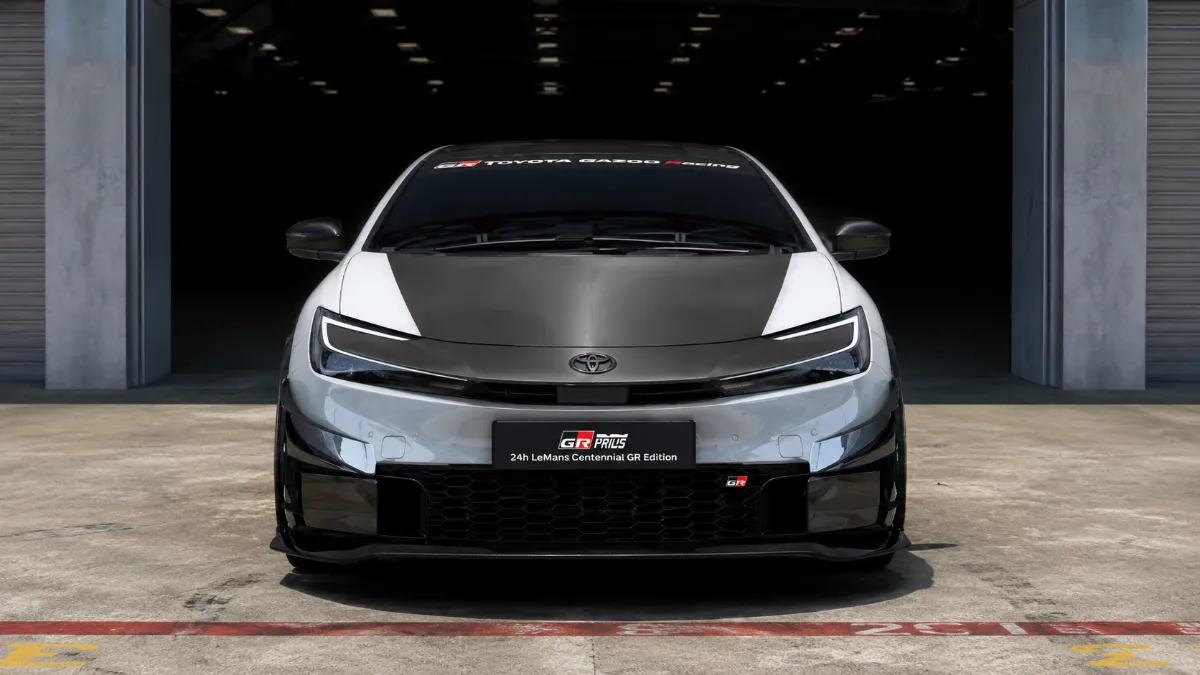
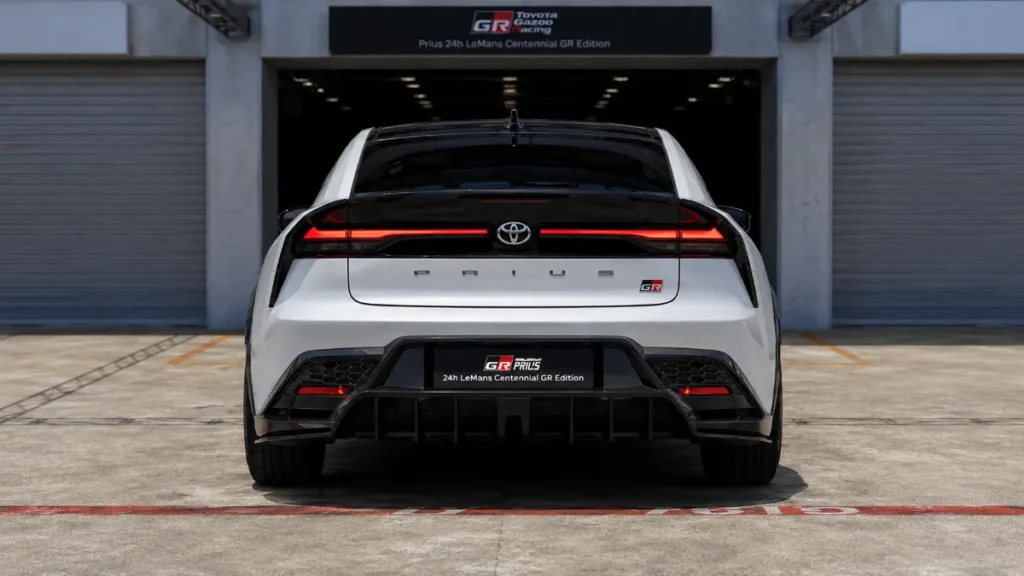
In 2023, the company displayed a Prius 24h Le Mans Centennial GR Edition concept with an extremely aggressive appearance.
The concept featured a lowered stance, wide tyres, dramatically extended bodywork and a large rear wing. It looked nothing like the conventional eco-focused Prius most people had grown accustomed to.
At the time, it was easy to dismiss the car as a motorsport celebration.
But with Toyota now expanding its GR performance portfolio, that concept has taken on new significance.
The production version, if Toyota decides to build one, would almost certainly be more restrained than the Le Mans-inspired concept.

2027 Toyota GR Prius Design
A future GR Prius could receive a much more aggressive exterior while retaining the basic shape of the current-generation Prius.
Potential changes could include:
- Wider front and rear tracks
- Larger air intakes
- GR-specific grille
- Lower ride height
- Wider fenders
- Sportier side skirts
- Larger alloy wheels
- High-performance tyres
- Larger brakes
- Rear diffuser
- Roof spoiler
- GR badging
- More aggressive front bumper
Toyota would have to be careful, though.
The current Prius is already aerodynamically focused, and dramatically increasing downforce or widening the body could affect efficiency.
That creates an interesting engineering challenge: how do you make a Prius fast without destroying what makes a Prius a Prius?
Toyota GR Prius Engine and Hybrid Powertrain
This is probably the biggest question surrounding the potential GR Prius.
Toyota has not confirmed what powertrain a production GR Prius would use.
The existing Prius Plug-in Hybrid is the obvious starting point. Its 2.0-litre engine and electric motors produce 220 hp, while its 13.6-kWh lithium-ion battery provides up to 44 miles of EPA-estimated electric driving range in the 2027 SE PHEV.
For a GR model, Toyota could potentially increase system output through:
- Higher-output electric motors
- Revised hybrid-system calibration
- More aggressive throttle mapping
- Improved cooling
- Performance-focused battery management
- Larger brakes
- Sportier transmission calibration
However, these are possibilities rather than confirmed specifications.
There is currently no official Toyota announcement confirming a specific GR Prius engine output.
Could the GR Prius Produce More Than 250 HP?
This is one of the most interesting possibilities.
The current 220-hp Prius Plug-in Hybrid already has respectable performance. A GR version producing somewhere above that figure could give Toyota a genuinely interesting performance hatchback.
But Toyota would need to balance performance against:
Weight + battery capacity + heat management + efficiency + cost.
A 250-hp-plus Prius would certainly attract enthusiasts, but it would also move the car further away from its traditional efficiency-first mission.
Toyota could instead focus on making the car feel faster through improved chassis tuning rather than chasing an enormous horsepower figure.
That might actually be the smarter approach.

GR Prius Could Focus More on Handling
The most exciting part of a future GR Prius might not be horsepower.
It could be the chassis.
Toyota Gazoo Racing has considerable experience tuning suspension, steering, brakes and aerodynamics.
A GR Prius could receive:
- Stiffer springs
- Retuned dampers
- Sharper steering
- Larger brakes
- Performance tyres
- Limited-slip differential technology
- Reinforced chassis components
- Lower ride height
This could transform the Prius from an efficient commuter into a car that is genuinely enjoyable on a winding road.
2027 Toyota GR Prius Interior
Inside, the GR treatment could be relatively subtle.
Toyota could introduce:
- GR sport seats
- Suede-style upholstery
- Red contrast stitching
- GR steering wheel
- Aluminium pedals
- GR-specific displays
- Sportier trim
- Performance-oriented drive modes
The current Prius already has a modern cabin with digital displays and Toyota’s latest infotainment technology.
The goal wouldn’t need to be a complete redesign.
Instead, Toyota could make the interior feel more focused on the driver.
Technology Could Remain a Major Strength
The standard 2027 Prius already offers modern technology.
Toyota’s latest model includes its fifth-generation hybrid system, available AWD and multiple driving modes including Normal, Eco and Sport.
The 2027 Prius also receives dual-zone automatic climate control as a new update, while the model continues with modern multimedia and connectivity features.
A GR version could build on that foundation with additional performance displays showing information such as:
- Power output
- Hybrid-system operation
- Battery state
- Motor assistance
- Acceleration data
- Energy regeneration
Could GR Prius Have AWD?
This is another area where Toyota already has useful technology.
The regular 2027 Prius is available with electronic on-demand AWD. Toyota says the system uses a separate rear-mounted permanent-magnet motor and can send power to the rear wheels when additional traction is required.
A performance-focused version could potentially use a more aggressive AWD calibration.
If Toyota combined that system with more power and performance tyres, the GR Prius could have considerably stronger corner-exit traction than a conventional front-wheel-drive hot hatch.

Again, this remains speculative until Toyota provides official specifications.
2027 GR Prius vs GR Corolla
If the GR Prius becomes real, Toyota would have an interesting internal comparison.
The GR Corolla is a traditional performance hatchback built around a turbocharged engine and enthusiast-focused mechanical setup.
A GR Prius would take a completely different approach.
| Feature | Potential GR Prius | GR Corolla |
|---|---|---|
| Powertrain | Hybrid/PHEV | Turbo petrol |
| Character | Electrified performance | Traditional performance |
| Efficiency | Likely much higher | Performance-focused |
| AWD | Possible | Yes |
| Main Strength | Instant electric assistance | Motorsport-inspired driving |
| Daily Use | Likely excellent | Practical but aggressive |
The GR Prius wouldn’t need to replace the GR Corolla.
Instead, it could create a completely new category: a performance hybrid hatchback that prioritises both efficiency and driving fun.
What About the 2027 Prius Plug-in Hybrid?
The existing 2027 Prius PHEV already makes the GR idea more believable.
Toyota officially lists 220 hp, a 13.6-kWh battery and up to 44 miles of EPA-estimated electric range for the SE grade.
The PHEV also offers Normal, Eco and Sport driving modes.
That means Toyota doesn’t need to start from scratch.
A GR version could potentially build upon the existing PHEV architecture with performance-focused suspension, brakes, tyres and software.
Toyota GR Prius Price
There is currently no official price for a GR Prius because Toyota has not officially announced a production model.
If Toyota eventually approves the project, the price would likely sit above the standard Prius and potentially above the Prius Plug-in Hybrid range.
For reference, Toyota’s official U.S. MSRP for the 2027 Prius starts at $28,755, while the 2027 Prius Plug-in Hybrid starts at $33,980, excluding applicable destination/dealer charges.
A GR model would likely command a premium because of its upgraded chassis, brakes, wheels and powertrain calibration.
Any exact GR Prius price circulating online right now should therefore be treated as an estimate.
When Could the GR Prius Arrive?
This is where caution is particularly important.
Recent reporting points to a 2027 timeframe, but Toyota has not officially confirmed the launch date or even confirmed that the production GR Prius project has been approved.

So the safest way to describe the car at this stage is:
Potential 2027 Toyota GR Prius — under development/reportedly being considered, not officially confirmed.
That distinction is important for readers because future-car reports can change quickly.
Why a GR Prius Would Be a Big Deal
A performance Prius would be more than just another GR model.
It would change the perception of the Prius itself.
For years, the Prius has been associated primarily with fuel economy.
A GR version could add another dimension:
efficiency + electrification + performance.
That would also fit Toyota’s broader strategy of offering different forms of electrification rather than moving exclusively toward battery-electric vehicles.
Toyota’s current Prius lineup already demonstrates that the company sees hybrid and plug-in hybrid technology as an important part of its future.
Final Verdict
The idea of a Toyota GR Prius sounds unusual at first, but the more you look at Toyota’s current technology and GR strategy, the more logical it becomes.
The current Prius is already significantly sportier than previous generations, while the Prius Plug-in Hybrid delivers 220 hp and surprisingly strong acceleration.
Toyota has also shown a willingness to bring GR-style performance to electrified vehicles, with the 2026 RAV4 GR Sport using a 324-hp plug-in-hybrid powertrain.
A production GR Prius could therefore become something genuinely different: a low-slung performance hybrid that offers everyday efficiency without giving up driving excitement.
But for now, the most important point is simple: the 2027 GR Prius is still a reported possibility, not an officially confirmed Toyota production car.
If Toyota does give the green light, however, the Prius could soon become one of the most unexpected members of the Gazoo Racing family.