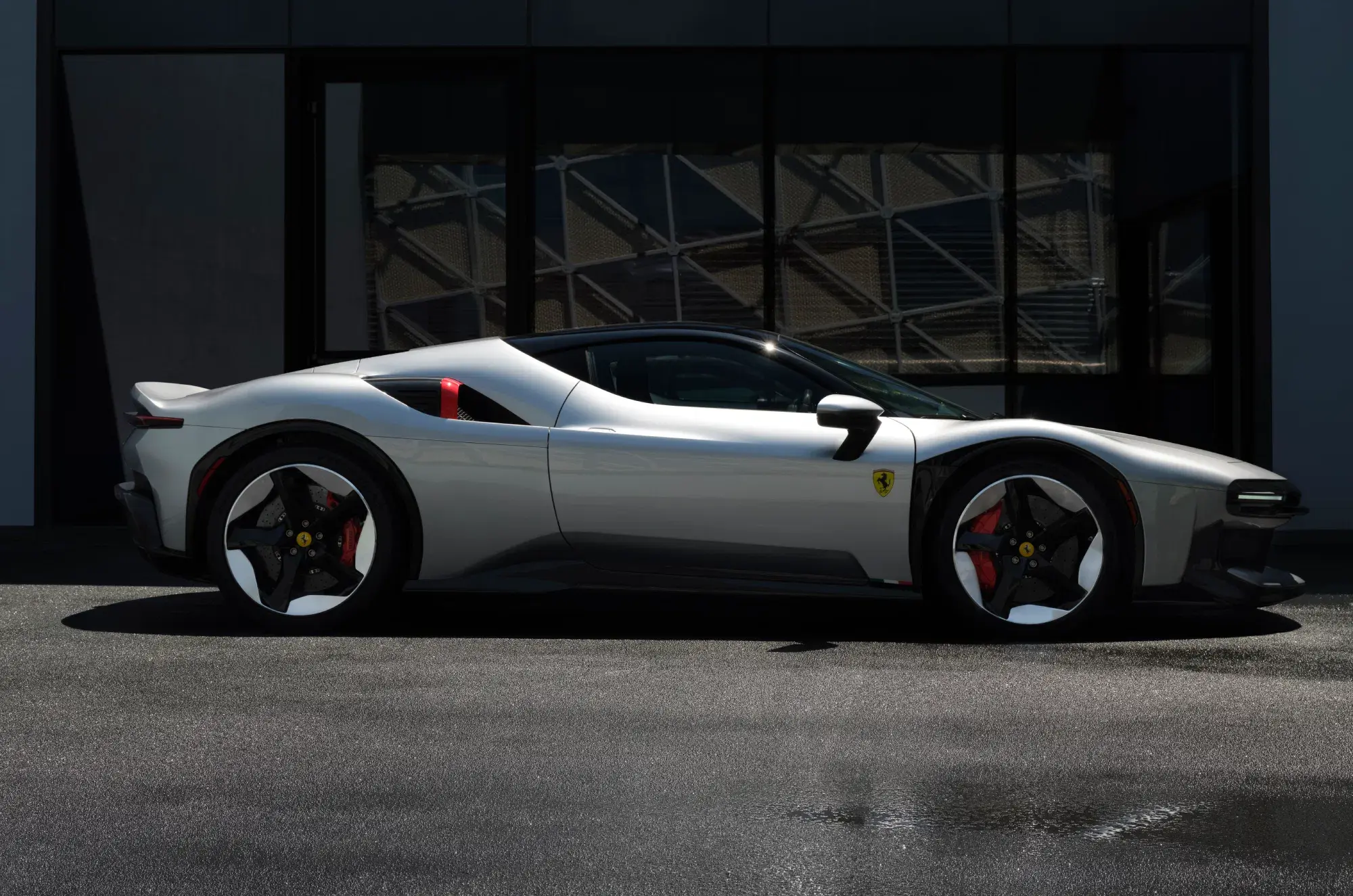
Ferrari Luce Interior Overview
The Ferrari Luce Interior is arguably one of the most interesting parts of Ferrari’s first fully electric car. Instead of filling the cabin with giant screens and complicated digital controls, Ferrari has taken a surprisingly different direction.
The cabin combines classic Ferrari-inspired design, physical controls, premium materials and modern digital displays. The interior was created in collaboration with LoveFrom, the design firm founded by Jony Ive and Marc Newson, bringing a distinctive retro-futuristic character to the cabin. Ferrari officially revealed the interior design and the Luce name on February 9, 2026.
What makes it especially interesting is that the Luce doesn’t feel like a typical futuristic EV. Instead, it tries to keep the driver connected to the car through buttons, switches, dials and tactile controls.
A Completely Different Ferrari Cabin
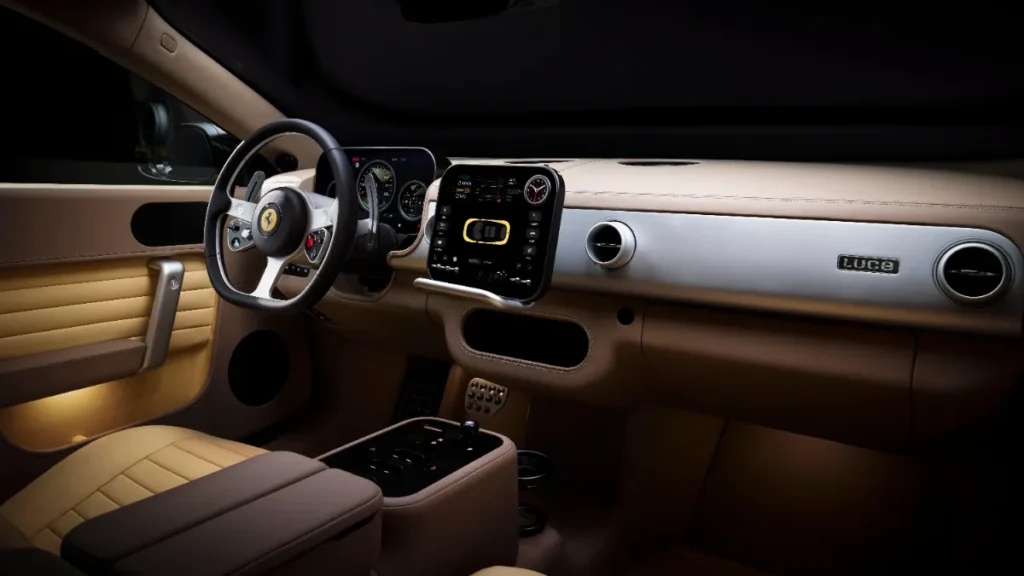
Walk into the Luce and the first impression is very different from many modern electric cars.
The dashboard isn’t dominated by one enormous screen. Instead, Ferrari has separated the cabin into clear functional areas, with the driver’s instruments, central controls and passenger environment each having their own identity.
The design takes inspiration from Ferrari’s classic cars from the 1950s and 1960s, while using modern OLED displays, glass and machined aluminium.
That combination gives the cabin a character that feels both familiar and new.
Classic-Inspired Steering Wheel
One of the standout elements of the Ferrari Luce interior is the steering wheel.
Ferrari has moved away from the increasingly complicated steering-wheel designs found in many modern performance cars.
The Luce uses a three-spoke steering wheel inspired by classic Ferrari steering wheels, with a thin-rimmed design and an exposed aluminium structure. The wheel uses specially developed recycled aluminium, while the controls are positioned so the driver can operate important functions without constantly looking away from the road.
This is a small detail, but it says a lot about Ferrari’s interior philosophy.
The goal isn’t simply to make the cabin look futuristic. It is to make the driver feel involved.
12.5-Inch Digital Instrument Display
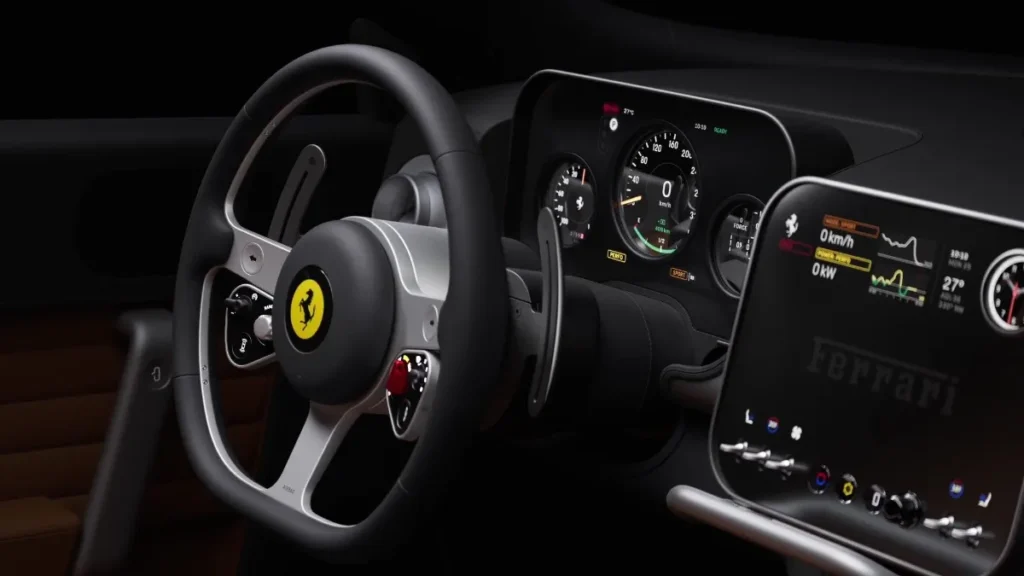
Behind the steering wheel sits a 12.5-inch OLED instrument panel.
But Ferrari hasn’t used it like a conventional giant digital screen.
The display contains graphics inspired by traditional analogue Ferrari instruments, including circular dials that visually resemble classic mechanical gauges.
This creates an interesting contrast.

You get the flexibility of a modern digital display while retaining the visual character of old-school Ferrari instrumentation.
For enthusiasts, this could be one of the most appealing details inside the Luce.
10-Inch Central Touchscreen
The central infotainment display is another unusual part of the Ferrari Luce interior.
It measures around 10 inches and isn’t simply fixed flat against the dashboard.
Ferrari has designed it with a pivoting mechanism, allowing the screen to be adjusted toward the occupants. A grab handle beneath the display also gives the driver a more natural way to interact with it.
This is a clever solution because it keeps the screen integrated into the dashboard rather than making the entire interior revolve around a huge digital panel.
Physical Controls Instead of Everything Being Touchscreen
Perhaps the most surprising feature of the Ferrari Luce interior is the use of physical controls.
Modern cars are increasingly moving climate controls, drive settings and other functions into touchscreens. Ferrari has chosen a different approach.
The Luce uses physical switches and controls for important functions such as climate adjustment and other vehicle settings.
This isn’t just about nostalgia.
Physical controls can be easier to operate by feel while driving because the driver doesn’t necessarily need to look down at a screen.
That philosophy is central to the Luce’s interior design.
The Ferrari Manettino Returns
Ferrari’s famous Manettino concept also has a place in the Luce cabin.
The control has been adapted for the electric car and sits within the driver’s control area. It helps maintain a visual connection with Ferrari’s performance-car heritage even though the Luce is powered entirely by electricity.
It is an excellent example of how Ferrari has tried to introduce new technology without abandoning familiar elements.

Glass and Aluminium Create a Premium Atmosphere
The materials used inside the Luce are another major highlight.
The cabin combines leather, anodised aluminium and specially engineered glass to create a premium but technical atmosphere.
The centre console incorporates strengthened glass, while the drive selector is another distinctive glass-based element. The result is very different from a conventional luxury-car interior covered almost entirely in wood and leather.
The design feels more like a carefully engineered piece of modern furniture than a traditional car dashboard.
Ferrari Luce Seats
The Luce takes Ferrari into new territory with its cabin layout.
It is a five-seat Ferrari, making the interior significantly more family-oriented than the company’s traditional two-seat sports cars. Autocar India notes that the car features rear-hinged doors and a rear bench designed to provide useful passenger space.
The seats themselves retain a sporty Ferrari character, with leather upholstery and Ferrari branding.
This combination of performance-focused front seating and a more practical rear area gives the Luce a different personality from Ferrari’s conventional sports cars.
Rear Passenger Area
Ferrari hasn’t forgotten the people sitting behind the driver.
The rear area includes its own climate controls and ventilation, while the rear bench gives the Luce a more practical character than most traditional Ferrari models.
This is an important part of the Luce’s interior story.
Ferrari isn’t simply creating an electric supercar with a battery. The company is exploring how an electric Ferrari can also become a more usable grand-touring machine.
A Cabin Designed Around the Driver
Despite the additional passenger space, the Luce interior remains strongly driver-focused.
The steering wheel, instrument display and primary controls are positioned to create a dedicated driving environment.
The central display and physical controls then sit around that main driver zone rather than overwhelming it.

This approach is particularly interesting because Ferrari has deliberately avoided the idea that more screens automatically mean a more advanced interior.
Instead, the Luce suggests that a genuinely modern cabin can combine digital technology with traditional mechanical interaction.
The Digital Key Is Part of the Experience
One of the cleverest details is Ferrari’s digital key.
The key itself uses a distinctive glass-based design and becomes part of the centre-console experience when placed into its dedicated dock.
Reports describing the interior reveal that the key changes visually when inserted into the magnetic dock, creating a small but theatrical interaction between the driver and the car.
It is a very Ferrari-like idea: even something as simple as starting the car becomes part of the overall experience.
The Luce Interior and Jony Ive’s Design Philosophy
The involvement of Jony Ive and LoveFrom is one reason the Ferrari Luce interior has attracted so much attention.
Ive is known for his work on major Apple products, but the Luce demonstrates a different philosophy from the touchscreen-heavy approach commonly associated with consumer electronics.
Here, the emphasis is on simplicity, tactile interaction and carefully considered interfaces.
The result is a cabin where technology doesn’t necessarily announce itself with huge displays.
Instead, technology is integrated into the surrounding materials and controls.
That is what gives the interior its unusual personality.
Why the Ferrari Luce Interior Feels Different
There are plenty of expensive electric cars with enormous screens, ambient lighting and futuristic dashboards.
The Luce takes another route.
Its design combines:

- Classic Ferrari inspiration
- Modern OLED displays
- Physical switches
- Machined aluminium
- Premium leather
- Strengthened glass
- Driver-focused controls
- A five-seat layout
- Bespoke digital interfaces
The result is a cabin that feels retro-futuristic rather than simply futuristic.
And that distinction matters.
The Luce doesn’t appear to be trying to erase Ferrari’s past. Instead, it uses elements of that past to make the electric future feel more familiar.
What Makes the Ferrari Luce Interior Special?
The biggest attraction isn’t any single feature.
It’s the way everything works together.
The analogue-style digital gauges complement the modern OLED technology.
The physical switches work alongside the touchscreen.
The classic-inspired steering wheel sits in front of futuristic digital instruments.
The glass centre console contrasts with leather upholstery.
And the five-seat layout gives the cabin a practical dimension that traditional Ferrari sports cars don’t normally offer.
That balance is what makes the Luce interior so interesting.
Final Verdict
The Ferrari Luce Interior is a bold departure from the usual formula for a modern electric car.
Instead of turning the cabin into a giant touchscreen, Ferrari has chosen to mix physical controls, classic-inspired instruments, premium materials and modern digital technology.
The result is an interior that feels carefully designed rather than technology-heavy.
The 12.5-inch OLED driver’s display, pivoting 10-inch central screen, physical climate controls, classic-style steering wheel, glass elements and five-seat layout all contribute to a cabin that is unlike anything else in Ferrari’s current range.
Most importantly, the Luce demonstrates that Ferrari’s electric future doesn’t have to mean abandoning the brand’s traditional driver-focused character.
It is a Ferrari interior designed for a new era—but with enough old-school character to remind you where the Prancing Horse came from.