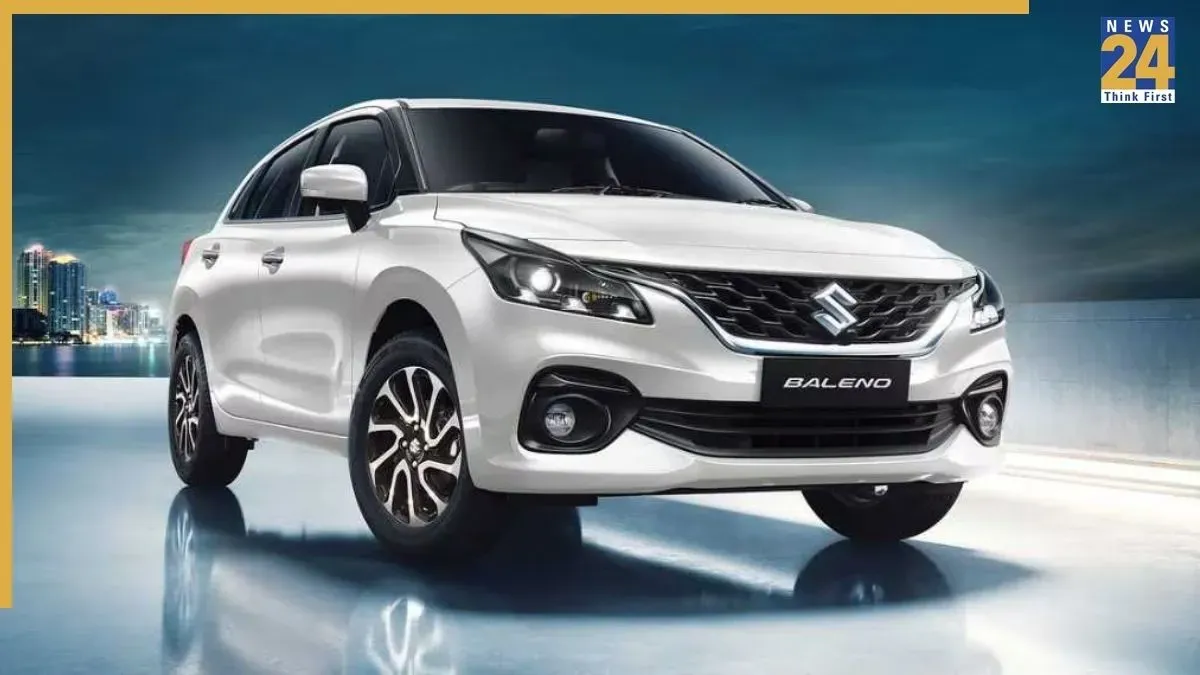
The Maruti Suzuki Baleno facelift is almost here, and this time Maruti Suzuki is preparing more than a cosmetic refresh. The popular premium hatchback, which entered its second generation in 2022, is due for its first major update, with a revised front-end design, new features and fresh cabin touches expected.
Maruti Suzuki has confirmed that the updated Baleno will be launched in India on September 5, 2026. Ahead of the launch, test cars have revealed several clues about what buyers can expect, while newer reports point to an important mechanical change and the arrival of ADAS and ventilated front seats.
Here is everything we know so far about the new Maruti Baleno facelift, including its design, expected features, powertrain, CNG option, safety technology and likely price.
Maruti Baleno Facelift 2026: Quick Overview
| Particular | Expected Details |
|---|---|
| Model | Maruti Suzuki Baleno Facelift |
| Launch Date | 5 September 2026 |
| Segment | Premium Hatchback |
| Existing Generation | Second Generation |
| Exterior | Revised front fascia |
| Grille | New design expected |
| Bumpers | Updated |
| Alloy Wheels | New design expected |
| Interior | Fresh upholstery and feature upgrades |
| Petrol Engine | New Z-Series engine reported |
| CNG | Expected |
| CNG-AMT | Reportedly coming |
| ADAS | Expected / reported |
| Ventilated Seats | Expected / reported |
| Infotainment | 9-inch unit expected to continue |
| Rivals | Hyundai i20, Tata Altroz, Toyota Glanza |
The launch date has been confirmed by Maruti, while some equipment and mechanical details remain based on recent reports and spy-shot analysis ahead of the official reveal.
Launch Date Confirmed for September 5
The biggest confirmed update is the launch timeline.
Maruti Suzuki will launch the Baleno facelift in India on September 5, 2026. The update comes roughly four years after the second-generation Baleno was introduced in 2022.
This timing fits Maruti’s usual product-refresh cycle and gives the Baleno a chance to remain competitive against newer hatchbacks that have arrived with increasingly long feature lists.
For buyers, the September launch will finally answer several questions that spy shots cannot fully settle, particularly around pricing, variant-wise features and the exact engine lineup.
1. New Front Design Will Give the Baleno a Fresh Face
The Maruti Suzuki Baleno facelift isn’t expected to completely change its overall shape. Instead, most of the styling work appears to be concentrated at the front.
Test cars have shown signs of a redesigned grille and front bumper, with a horizontal element running between the headlamps.
The familiar headlamp and boomerang-shaped DRL arrangement is expected to remain largely recognizable, which means Maruti is taking an evolutionary approach rather than starting from scratch.
That should make the facelift instantly recognizable as a Baleno while giving it a little more visual freshness.
Expected exterior changes
- Revised front grille
- New front bumper
- Updated fascia
- New alloy-wheel design
- Possible lighting revisions
- Updated rear bumper
- Fresh exterior details
2. Side Profile Will Stay Familiar
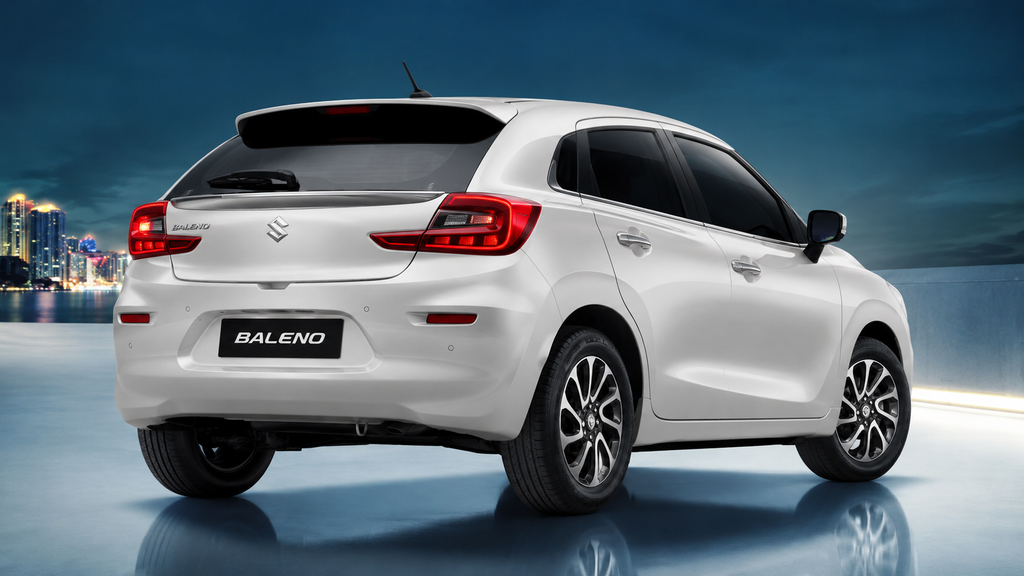
From the side, the Baleno is expected to retain its basic profile.
This is not surprising for a facelift. The roofline, doors and overall proportions are expensive components to redesign, while alloy wheels and small detailing changes can make the car feel fresh without adding unnecessary cost.
Spy shots suggest that new alloy wheels will be one of the more visible changes in profile.
The rear is expected to receive a more modest update, with the bumper likely changing while the existing tail-lamp design continues.
3. Interior Could Get More Features, Not a Radical Redesign
The cabin is one of the areas where the Baleno may receive a meaningful equipment upgrade.
Earlier test vehicles showed a dashboard layout broadly similar to the current car, including the 9-inch free-standing touchscreen and familiar air-conditioning arrangement.
However, Maruti is expected to freshen the cabin with new upholstery, revised materials and several features that are now becoming common in the premium-hatchback segment.
Potential additions include:

- New seat upholstery
- Ambient lighting
- Ventilated front seats
- Wireless charger
- Updated infotainment experience
- Additional connected-car features
- Possible larger or revised display equipment
Some of these features were initially expected based on test cars and segment trends, while ventilated seats and ADAS have been reported as confirmed additions ahead of launch.
4. Ventilated Seats Could Be a Big Upgrade
For Indian buyers, this could be one of the most useful additions.
Ventilated front seats are becoming increasingly popular as temperatures rise across the country, especially during the summer months.
Instead of being a luxury feature found mainly in expensive cars, ventilated seating is gradually moving into mainstream models.
The Baleno facelift is reported to get ventilated front seats, which would give Maruti a strong talking point against rivals such as the Hyundai i20 and Tata Altroz.
For someone who parks outside during a hot afternoon, this feature could be much more useful than another cosmetic update.
5. ADAS Could Be the Biggest Safety Story
The most interesting development is the reported arrival of ADAS.
Recent reports indicate that the Baleno facelift is expected to receive Level 1 ADAS-related features, including:
- Blind-spot warning
- Rear cross-traffic alert
- Safe-exit alert
If delivered as reported, the Baleno would become one of the more affordable hatchbacks in India to offer this kind of driver-assistance technology.
There is, however, an important point to remember.
ADAS is designed to assist the driver. It does not turn the Baleno into a self-driving car.
The driver still needs to pay attention to traffic, road conditions and the surrounding environment.
6. The Engine Story Could Be More Important Than the Styling
Initially, the Baleno facelift was widely expected to continue with the existing 1.2-litre naturally aspirated petrol engine and CNG powertrain.
But a newer report from CarWale points to a significant change: the facelift is expected to use Maruti Suzuki’s Z-Series three-cylinder petrol engine, similar to the unit used in the Swift.
That would make the engine story more interesting than a normal facelift.
The reported petrol engine output is expected to be around the same general territory as the current Baleno, but the change could be aimed at improving efficiency and simplifying Maruti’s powertrain family.
The final engine specification, output and fuel-economy figures should be confirmed at launch.
7. CNG Could Continue — and CNG-AMT Is the Real Surprise
Maruti Suzuki has already built a strong reputation for offering CNG variants, and the Baleno facelift is expected to continue that option.
But the more interesting development is the reported CNG-AMT combination.

CarWale reports that the updated Baleno will be offered with CNG and an automated manual transmission, potentially making it the first Maruti Suzuki model to combine these two technologies.
That could be a genuinely practical upgrade for city buyers.
CNG appeals to customers who want lower fuel costs, while AMT makes stop-and-go traffic easier.
Combining the two could give Maruti a strong selling point in urban markets.
8. Existing Features Are Likely to Return
Even with the new additions, Maruti is expected to retain several popular Baleno features.
These may include:
- 9-inch touchscreen infotainment
- Wireless Android Auto
- Wireless Apple CarPlay
- Head-up display
- Automatic climate control
- Rear AC vents
- Connected-car technology
- USB charging ports
- 60:40 split rear seats
- Rear wiper and washer
- Six airbags, subject to final variant allocation
- 360-degree camera on higher trims
The current-generation Baleno was already considered a feature-rich premium hatchback when it arrived in 2022, so Maruti is more likely to upgrade the package than remove its core equipment.
9. 360-Degree Camera Could Remain a Highlight
The second-generation Baleno made plenty of noise when it introduced a 360-degree camera in its segment.
The facelift is expected to retain that feature on higher variants.
For city buyers, this is one of those features that can actually make daily life easier.
Parking in tight spaces, navigating apartment basements and squeezing into crowded market parking areas becomes less stressful when the driver can see the car from multiple angles.
10. Safety Package Should Become Stronger
Maruti has been gradually increasing the amount of safety equipment across its range, and the Baleno facelift is expected to follow the same direction.
Alongside the reported ADAS additions, the updated car could continue with features such as:
- Six airbags
- ABS with EBD
- Electronic Stability Control
- Hill-hold assist
- Rear parking sensors
- 360-degree camera
- ISOFIX mounts
- Blind-spot monitoring on suitable variants
The final safety list will be confirmed when Maruti releases the complete variant-wise specification sheet.
11. Expected Baleno Facelift Price
The current Baleno has been positioned in the mainstream premium-hatchback market, and the facelift is expected to carry a modest premium because of its additional equipment.
Autocar India’s current estimate places the facelift around ₹6.97 lakh to ₹8.85 lakh on-road in Vadodara, while the exact ex-showroom variant pricing will be announced at launch.
The current model’s ex-showroom range has been reported around ₹5.99 lakh to ₹9.14 lakh depending on source and variant timing.
So buyers should wait for the official September 5 price announcement rather than relying on early estimates.
12. Mileage Could Remain One of Its Biggest Strengths
Mileage is one area where Maruti is unlikely to abandon its core buyer.

The current Baleno’s listed mileage range is around 22.35 kmpl to 30.61 km/kg, depending on petrol/CNG configuration and testing basis.
The facelift’s final certified figures are still awaited.
If Maruti combines the new Z-Series engine with efficient calibration and CNG technology, fuel economy could remain a major part of the car’s appeal.
For Indian buyers who drive every day, this may matter more than an aggressive new bumper design.
13. Baleno Facelift vs Hyundai i20
The Hyundai i20 remains one of the most obvious competitors.
The Baleno traditionally appeals to buyers looking for:
- Spacious cabin
- Strong fuel economy
- Maruti’s wide service network
- Practical ownership
- Large feature list
The facelift could strengthen that case by adding ADAS, ventilated seats and other equipment.
The i20, meanwhile, continues to attract buyers who prioritize premium cabin feel and styling.
14. Baleno Facelift vs Tata Altroz
The Tata Altroz is another important competitor.
The Altroz has built its identity around safety, design and a solid-feeling cabin.
The updated Baleno could counter that with:
Maruti’s service reach + efficiency + new technology + CNG-AMT possibility.
For consumers comparing the two, the final prices and exact variant equipment will be crucial.
15. Baleno Facelift vs Toyota Glanza
The Toyota Glanza shares its basic architecture with the Baleno, so the two will naturally remain closely related.
The new Baleno’s updates are therefore also important for Toyota’s model strategy.
Buyers comparing both should look at:
- Price
- Warranty
- Dealer experience
- Variant equipment
- CNG availability
- ADAS equipment
- After-sales support
rather than simply choosing based on the badge.
Why This Facelift Matters
The Maruti Suzuki Baleno facelift arrives at a time when premium hatchbacks are under pressure from compact SUVs.
Many buyers who once purchased a hatchback are now moving toward small SUVs because of their higher seating position and road presence.

That means Maruti needs the Baleno to offer something that a basic hatchback cannot.
The facelift’s reported focus on ADAS, ventilated seats, connected technology and CNG-AMT could be exactly the sort of equipment needed to keep the model relevant.
Should You Wait for the New Baleno?
For buyers who are not in a hurry, waiting makes sense.
The launch is only days away, and the facelift could bring important changes beyond styling.
You’ll be able to compare:
- Actual price
- New engine
- CNG-AMT availability
- ADAS features
- Ventilated seats
- New variant lineup
- Updated safety equipment
against the outgoing model.
On the other hand, buyers looking for a heavily discounted current-generation Baleno may find attractive dealer offers as the facelift approaches.
Final Verdict
The Maruti Suzuki Baleno facelift looks set to be a carefully planned upgrade rather than a complete redesign.
The exterior is expected to receive a new grille, revised bumpers and fresh wheels, while the cabin could gain new upholstery and several useful features. More importantly, recent reports point to Level 1 ADAS, ventilated front seats and a new Z-Series petrol/CNG powertrain strategy, including the possibility of CNG with an AMT.
Maruti has confirmed the September 5, 2026 launch, so the remaining questions—especially official pricing, variant details and final specifications—will soon be answered.
For Indian buyers, the Baleno’s biggest strength may remain the same: it aims to be easy to live with. Add better technology, stronger safety equipment and potentially more flexible powertrain choices, and the facelift could give Maruti’s premium hatchback another strong run in a market increasingly dominated by SUVs.
FAQs
When will the Maruti Baleno facelift launch?
Maruti Suzuki has confirmed that the updated Baleno will launch on September 5, 2026.
What will change on the Baleno facelift?
Expected changes include a revised grille and bumper, new alloy wheels, updated cabin upholstery and additional features.
Will the Baleno facelift get ADAS?
Recent reports indicate Level 1 ADAS features, including blind-spot warning, rear cross-traffic alert and safe-exit alert. Final variant-wise availability will be confirmed at launch.
Will ventilated seats be available?
Yes, ventilated front seats have been reported as one of the major additions to the facelift.
Will the new Baleno come with CNG?
A CNG version is expected, and recent reporting also points to a possible CNG-AMT combination.
What cars will compete with the new Baleno?
The main rivals will continue to include the Hyundai i20, Tata Altroz and Toyota Glanza.
Is the Baleno facelift a new generation?
No. It is expected to be an update to the second-generation Baleno that was introduced in 2022.