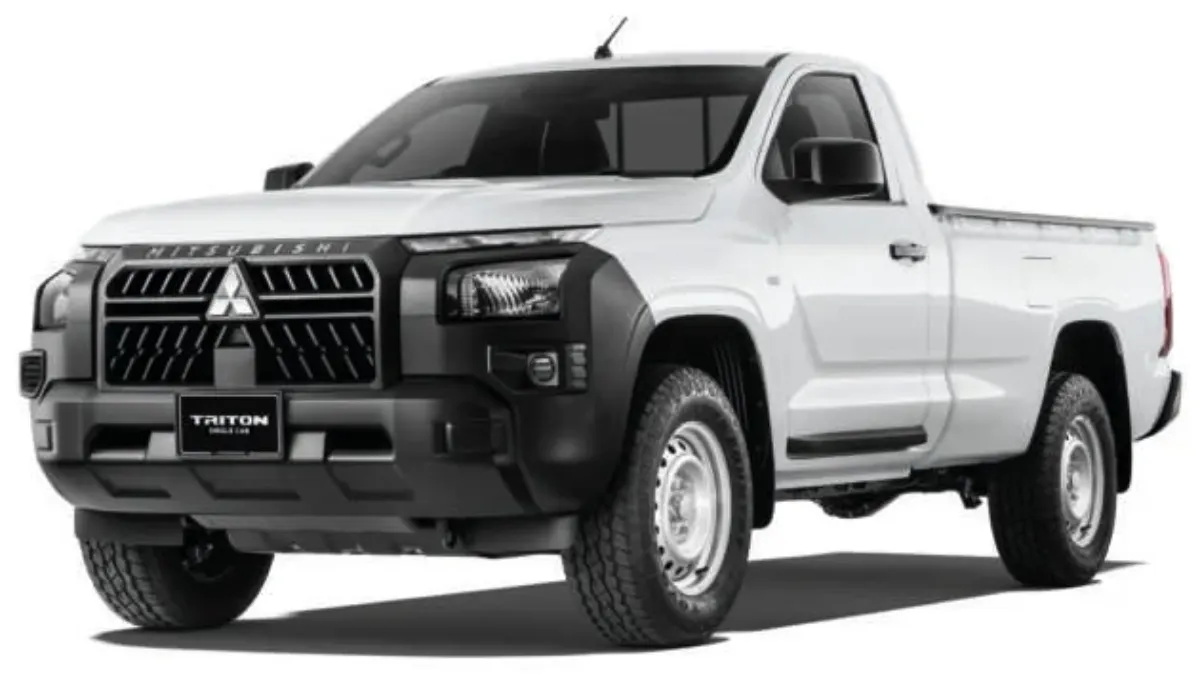
Mitsubishi has expanded the Triton Single Cab lineup in Malaysia with a new automatic version, giving commercial and work-focused pickup buyers an option that was previously missing from the range.
Called the Mitsubishi Triton Single Cab AT, the new pickup gets a six-speed automatic transmission while retaining the familiar 2.4-litre turbo-diesel engine, Easy Select 4WD system and generous cargo bed. It is priced at RM107,980 on the road, excluding insurance, for private registration in Peninsular Malaysia.
The automatic version also brings useful equipment such as reverse sensors and a rear differential lock, making it more practical for businesses, farms and buyers who regularly carry loads over uneven surfaces.
Mitsubishi Triton Single Cab AT: Quick Overview
| Feature | Details |
|---|---|
| Model | Mitsubishi Triton Single Cab AT |
| Market | Malaysia |
| Engine | 2.4L 4N16 Turbo Diesel |
| Displacement | 2,442cc |
| Maximum Power | 184 PS |
| Maximum Torque | 430 Nm |
| Transmission | 6-speed Automatic |
| Drivetrain | Easy Select 4WD |
| Rear Differential Lock | Yes |
| Payload | Up to 1,145 kg |
| Cargo Bed | 2,340 × 1,580 × 515 mm |
| Tyres | 265/65 R17 All-Terrain |
| Wheels | 17-inch steel |
| Fuel Tank | 75 litres |
| Warranty | 5 years / 200,000 km |
| Price | RM107,980 |
Mitsubishi Motors Malaysia’s official specifications confirm the engine, automatic gearbox, 4WD system, rear differential lock and dimensions.
The Biggest Change Is the Automatic Gearbox
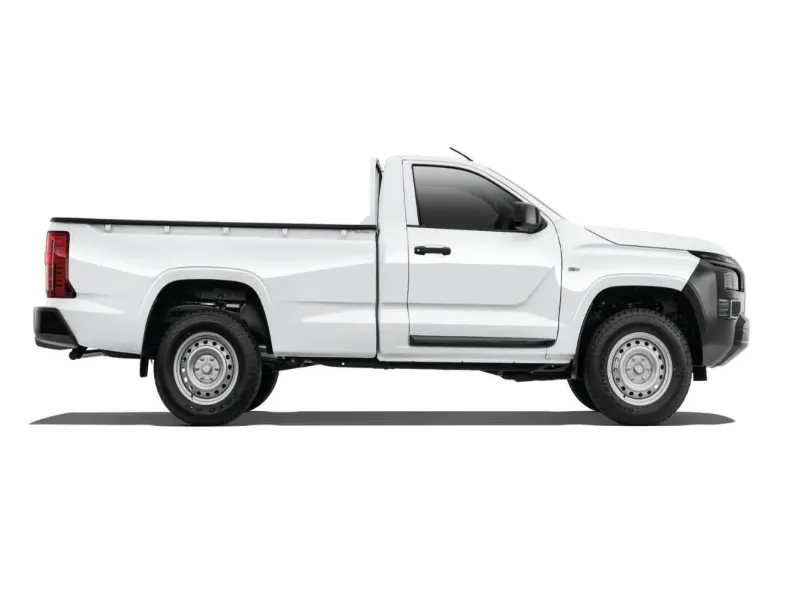
The main reason for introducing the new Triton Single Cab AT is simple: Mitsubishi now gives single-cab customers the choice of an automatic transmission.
The pickup uses a six-speed automatic gearbox, matching the six-speed count offered by the existing manual version.
For someone driving a pickup for several hours every day, this could make a meaningful difference.
Imagine a typical workday: leaving a warehouse, moving through busy traffic, stopping repeatedly at junctions, reaching a construction site and then heading back in the evening. Constant clutch operation can become tiring.
An automatic gearbox takes much of that repetitive work away.
Mitsubishi Motors Malaysia says the new version is aimed particularly at businesses such as SMEs, maintenance operators and agricultural users, where reducing driver fatigue can be valuable.
2.4-Litre Turbo-Diesel Engine Continues
Mitsubishi has not changed the core engine for the Single Cab AT.
The pickup continues with the 2.4-litre 4N16 common-rail turbo-diesel engine, producing 184 PS at 3,500 rpm and 430 Nm between 2,250 and 2,500 rpm.
Those torque figures are particularly relevant for a working pickup.
The Triton needs to be able to:
- Carry heavy loads
- Climb slopes
- Travel on rough surfaces
- Tow when required
- Move confidently away from a stop
- Operate in agricultural and commercial environments
The 430 Nm torque figure gives the engine the kind of low- and mid-range strength that makes sense for these jobs.
Easy Select 4WD Comes Standard
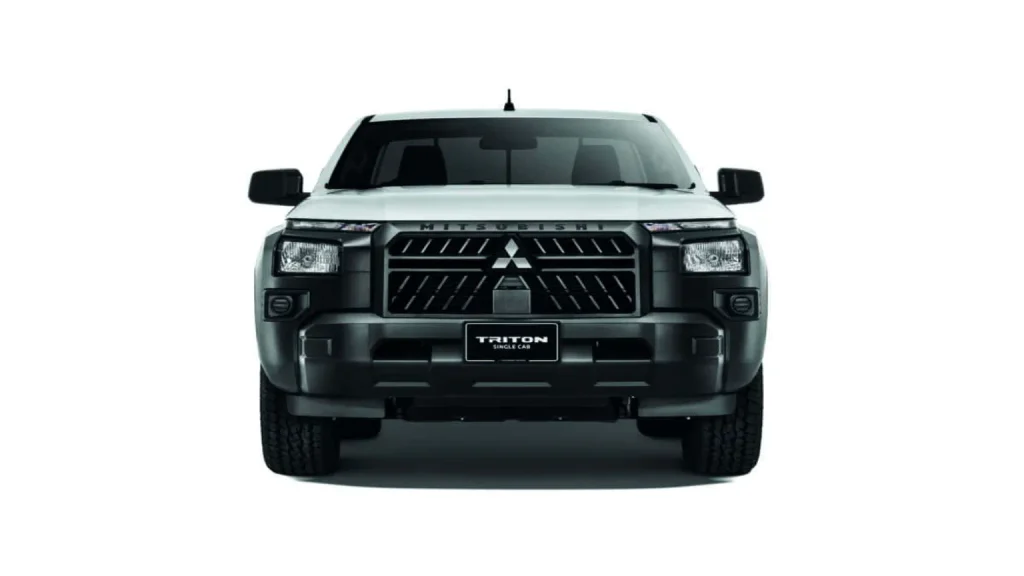
The Mitsubishi Triton Single Cab AT uses Mitsubishi’s Easy Select 4WD system.
The driver can select between:
- 2H – two-wheel drive
- 4H – four-wheel drive
- 4L – low-range four-wheel drive
This gives the pickup much more flexibility than a purely road-focused commercial vehicle.
For normal paved-road driving, 2H is appropriate, while 4H and 4L can be used according to the conditions and Mitsubishi’s operating instructions.
The low-range setting is particularly useful when extra control and torque multiplication are needed on challenging terrain.
Rear Differential Lock Is a Big Deal
Another useful feature is the rear differential lock.
A differential normally allows the two driven wheels on an axle to rotate at different speeds when the vehicle turns. That is useful during normal road driving, but it can become a limitation when one wheel loses traction.
The rear differential lock helps provide more equal drive to the rear wheels when traction is poor.
That can be useful on:

- Mud
- Loose gravel
- Slippery farm tracks
- Uneven ground
- Construction sites
- Steep or rough surfaces
Mitsubishi specifically highlights the rear differential locking system as a feature designed to provide maximum traction at the push of a button.
For a work-focused pickup, this is much more than a cosmetic feature.
Reverse Sensors Added
The Triton Single Cab AT also comes with reverse sensors.
This is especially useful because a pickup’s cargo bed can make judging the rear of the vehicle difficult when reversing.
Whether you’re backing into a warehouse, loading area, farm entrance or construction site, the sensors can provide an additional warning about obstacles behind the vehicle.
It is a small addition, but one that could be appreciated every day.
1,145kg Payload Capacity
A pickup needs to do more than look tough.
It needs to carry equipment.
The Triton Single Cab has a reported maximum payload of 1,145kg, giving it useful carrying capability for commercial and agricultural work.
That makes it suitable for transporting things such as:
- Tools
- Construction equipment
- Agricultural supplies
- Spare parts
- Machinery
- Building materials
- Maintenance equipment
Payload can vary depending on the exact operating conditions and regulations, so owners should follow the vehicle’s official loading limits.
Large Cargo Bed
The cargo area measures:
2,340mm long × 1,580mm wide × 515mm high.
That is a practical size for a work pickup.
The new model also gets a bedliner as standard, helping protect the cargo area from scratches, dirt and everyday commercial use.
For owners who treat their pickup as a working tool rather than a lifestyle vehicle, this kind of equipment can be more valuable than a long list of luxury features.
Wide All-Terrain Tyres
The Single Cab AT rides on 265/65 R17 all-terrain tyres mounted on 17-inch steel wheels.
The wide tyres are designed to provide a useful balance across different surfaces.
They can be helpful on:
- Dirt roads
- Gravel
- Wet surfaces
- Grass
- Uneven tracks
- Normal paved roads
Steel wheels also make sense for a commercial vehicle because they are generally easier to live with when the vehicle is used for demanding work.
Suspension Setup Is Built for Work
The Triton Single Cab uses a double-wishbone front suspension with coil springs and a stabilizer bar, while the rear uses elliptic leaf springs.
That rear leaf-spring setup is particularly appropriate for a pickup designed to carry loads.
The suspension has to balance two different requirements:

Comfort when empty + stability when carrying cargo.
That’s never an easy compromise, but it is essential for a work-focused pickup.
Braking Hardware
The Triton Single Cab AT gets:
- Ventilated front disc brakes
- Rear leading-and-trailing drum brakes
- Brake Assist
- Active Stability Control
- Brake Override System
- Hill-Start Assist
- Trailer Stability Assist
The official Malaysian specification sheet lists these systems as part of the vehicle’s equipment.
Trailer Stability Assist is particularly useful for buyers who may occasionally tow equipment or trailers.
Safety Features
Although this is a basic commercial pickup, Mitsubishi has not ignored safety.
The Single Cab AT is equipped with three airbags, including a driver’s knee airbag.
Other listed safety equipment includes:
- Active Stability Control
- Brake Assist
- Hill-Start Assist
- Trailer Stability Assist
- Emergency Stop Signal
- Seatbelt reminders
- Rear reverse sensors
- Immobiliser and alarm
- Side-impact door beams
- RISE body construction
The vehicle also uses Mitsubishi’s RISE body structure and includes a reinforced frame structure.
Simple Cabin for a Practical Purpose
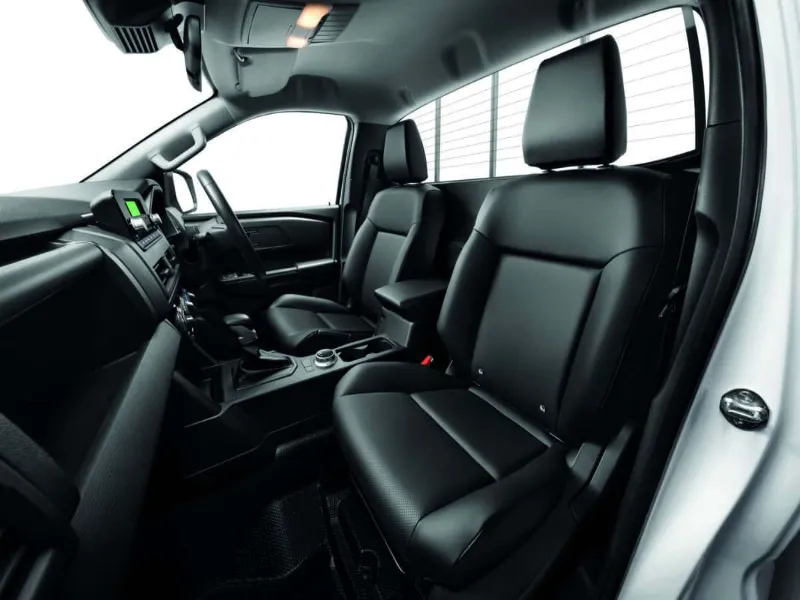
The interior isn’t trying to turn the Single Cab into a luxury SUV.
The focus is on durability and functionality.
The pickup uses black vinyl seats, which are easier to clean and more suitable for a vehicle that may be exposed to dust, mud and frequent commercial use.
The black interior also fits the working nature of the vehicle.
This is the kind of cabin where practicality matters more than soft-touch materials.
Exterior Appearance
The Triton Single Cab AT keeps Mitsubishi’s modern Triton design language while using a simpler specification suited to commercial users.
The vehicle includes:
- Black front Dynamic Shield design
- Black door handles
- Power-adjustable mirrors
- Black rear bumper
- Rear step bumper
- Auto lights
- Auto wipers
- LED high-mounted stop lamp
The official Malaysian variant information lists Solid White as the only exterior colour for this model.
Price: RM107,980
The new Mitsubishi Triton Single Cab AT price is RM107,980 on the road before insurance for private registration in Peninsular Malaysia.
The vehicle carries a premium over the manual Single Cab.
This price difference essentially gives buyers the convenience of the automatic gearbox along with the additional reverse sensors.
Price Comparison
| Model | Price |
|---|---|
| Triton Single Cab AT | RM107,980 |
| Triton Single Cab MT MY26 | RM104,980 |
| Difference | RM3,000 |
The reported RM3,000 difference is between the AT and the MY26 manual version.
For a business that puts many kilometres on a vehicle each month, the automatic transmission may justify that extra cost.
Limited-Time Diesel Support
Mitsubishi Motors Malaysia is also offering RM4,000 diesel support for a limited time for buyers of the Triton Single Cab AT.

Promotional offers can have conditions and expiry dates, so buyers should confirm the current offer with Mitsubishi Motors Malaysia or an authorised dealer before booking.
Warranty
The Triton Single Cab AT comes with a five-year or 200,000km warranty, whichever applies under the manufacturer’s terms.
For commercial owners, a long warranty period can provide some additional peace of mind because the vehicle may be driven significantly more than a privately used passenger car.
Where Does the Triton Single Cab AT Make the Most Sense?
The new automatic model is particularly suited to customers who use a pickup as part of their daily work.
Think of:
Construction companies
A pickup can carry tools and materials while 4WD helps access rough job sites.
Farm and agricultural operators
Mud, grass and uneven tracks are common, making 4WD and the rear differential lock useful.
Maintenance companies
Plumbers, electricians and equipment-service teams can carry tools and parts without filling the passenger cabin.
Small businesses
For owners who need a dedicated work vehicle, an automatic pickup can be more comfortable for drivers covering long distances.
Mitsubishi itself has highlighted SMEs, maintenance operators and agricultural users as important customers for this version.
Is the Automatic Worth Paying More For?
For a private buyer who drives only occasionally, the manual version could remain perfectly adequate.
But for a professional driver spending several hours behind the wheel every day, the automatic makes more sense.
The extra convenience becomes especially noticeable in heavy traffic.
There is no need to repeatedly press the clutch pedal, shift manually and then repeat the process every few seconds.
That can reduce fatigue without sacrificing the Triton’s core work-related capabilities.
What Hasn’t Changed?
The automatic transmission is the headline addition, but Mitsubishi hasn’t dramatically altered the rest of the vehicle.
The Single Cab AT continues with:
- 2.4-litre turbo-diesel engine
- 184 PS
- 430 Nm
- Easy Select 4WD
- 1,145kg payload
- 2,340mm cargo-bed length
- 265/65 R17 all-terrain tyres
- Leaf-spring rear suspension
- 75-litre fuel tank
- Three airbags
In other words, Mitsubishi has taken an existing workhorse recipe and added the automatic gearbox that some commercial customers were asking for.
Mitsubishi Triton Single Cab AT: Pros and Cons
Pros
Six-speed automatic: Easier and less tiring in traffic.

430Nm torque: Strong output for carrying loads and difficult terrain.
Easy Select 4WD: Gives the pickup added off-road flexibility.
Rear differential lock: Useful when traction becomes difficult.
Large cargo bed: Suitable for commercial equipment and materials.
1,145kg payload: Strong work-focused capability.
Reverse sensors: Helpful during daily manoeuvring.
Five-year/200,000km warranty: Useful for commercial owners.
Cons
Single-cab configuration: Less practical for carrying several passengers.
Basic cabin: It prioritises durability over luxury.
Only one exterior colour: Solid White.
Rear drum brakes: Some buyers may prefer all-disc brakes.
Limited passenger space: The work-focused layout naturally sacrifices rear seating.
Final Verdict
The Mitsubishi Triton Single Cab AT isn’t trying to be a luxury pickup.
That’s actually the point.
Mitsubishi has taken a straightforward commercial truck and added one feature that can make a major difference to people who use it every day: a six-speed automatic transmission.
At RM107,980, buyers get a 2.4-litre turbo-diesel producing 184 PS and 430 Nm, Easy Select 4WD, a rear differential lock, 1,145kg payload capacity, a large cargo bed, all-terrain tyres and reverse sensors.
For someone running a farm, maintenance business, construction operation or small company, the automatic gearbox could be worth the additional money simply because it makes long hours behind the wheel easier.
The rear differential lock and 4WD system also mean this isn’t just a road-going pickup with a big cargo box. It has the hardware needed to work in places where the road disappears.
In the end, the new Triton Single Cab AT succeeds because it doesn’t overcomplicate the formula.
It carries the load, handles difficult surfaces and now lets the driver leave the clutch pedal alone.
That is exactly what many commercial pickup buyers need.